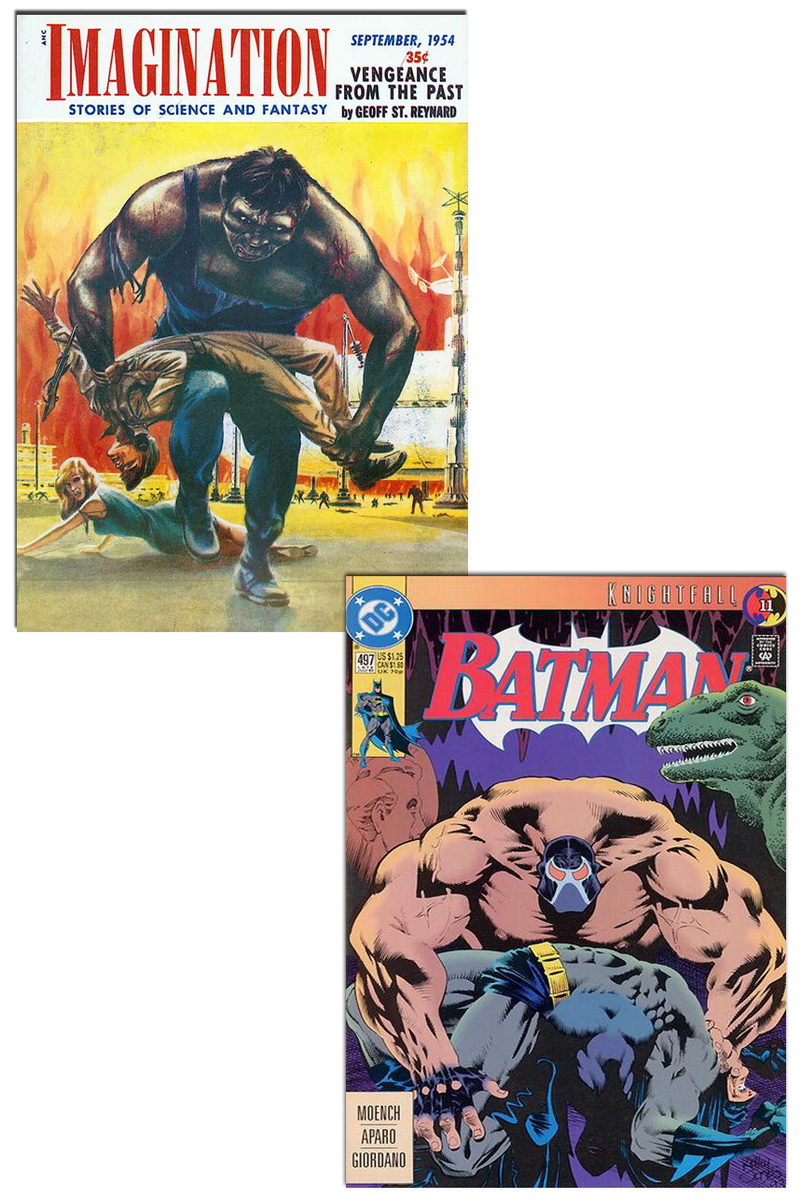
 Imagination (September 1954) & Batman #497 (July 1993).
Showing posts with label pulps did it first. Show all posts
Showing posts with label pulps did it first. Show all posts
Monday, August 24, 2009
Pulps Did It First: Knightfall of Imagination


Saturday, August 23, 2008
The Whispering Gorilla
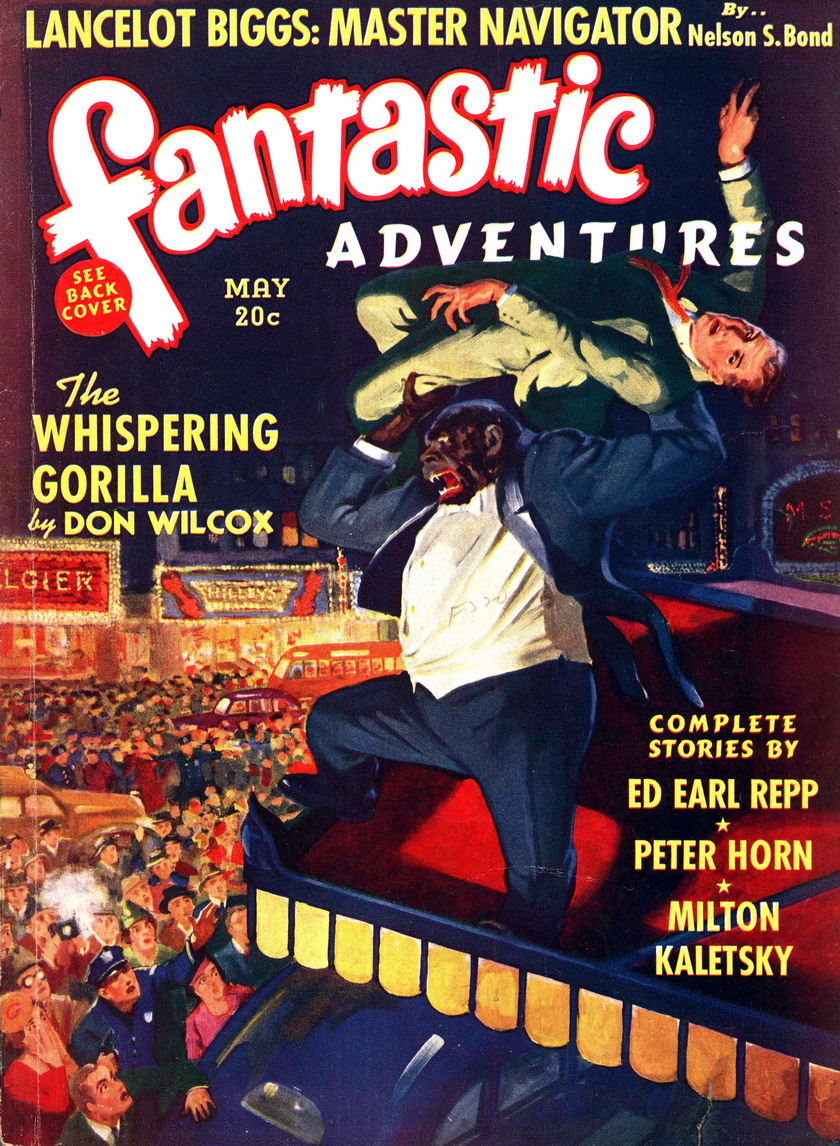 The Whispering Gorilla is another example of where the storytelling of the the pulps influenced the several decades of the comic books that replaced them.
The Whispering Gorilla is a story of a crime-victim who had his brain transplanted into the body of a gorilla. Wasting no time, the protagonist quickly escapes to exact horrible revenge on those that preyed upon the innocents of the city and created his horrible condition. Over the course of the story the character says goodbye (after a fashion) to the wife he lost when his body was destroyed and accomplishes his mission, though a severe beating he receives at the clubs of frightened police reduces his human brain to that of a simple, instinctual animal.
While this is a pretty standard revenge plot that has a few touches of the Shadow thrown in an interesting aside to the story is that "W.G.", as he is known to be popularly called, is a public figure, albeit with a "secret identity." Most noteworthy is the idea that since people can not truly determine if the intelligent, talking gorilla attending their social gatherings is human or not, the populace at large treats him as if he is anyways, so as not to offend. Whether this respect is out of a healthy dose of fear or politeness is not clear.
This basic story of a person changed through circumstance to return in a more powerful and less helpless form would proliferate in the Golden Age of comics and absolutely saturate the Silver Age, particularly that of DC Comics, the comic book industry being where pulp veterans Otto Binder, Julius Schwartz and others moved to after the decline of the pulp market. You could barely pick up a Silver Age title without finding at least one brain transplant story in it. The Silver Age character of the Congorilla is a direct descendant of this type of story. Transformation is the primary theme of the comic book, carried over from the pulp heroes with their ritualistic costume and uniform changes. Modern comics still follow the old pulp formula and one of the greatest modern booms in comic book creativity, that of Marvel of the 1960s, is founded on the very same idea.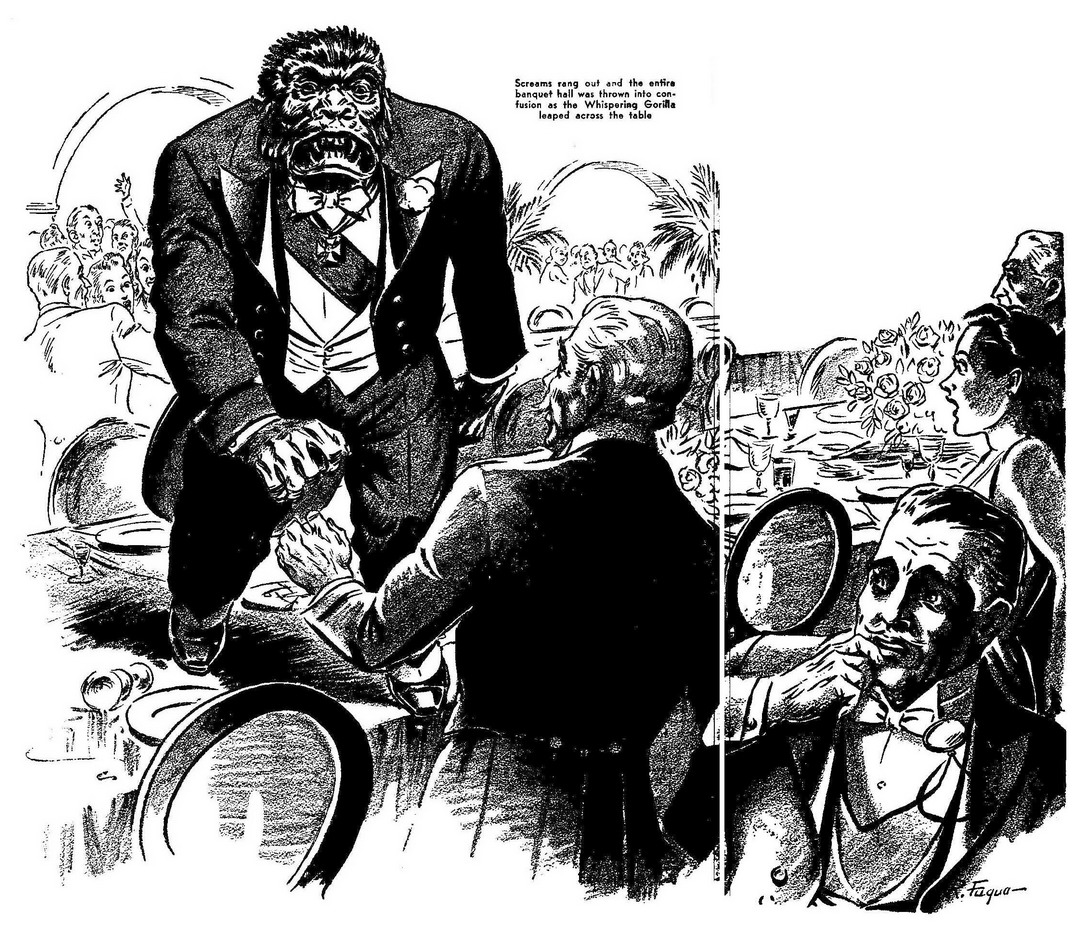

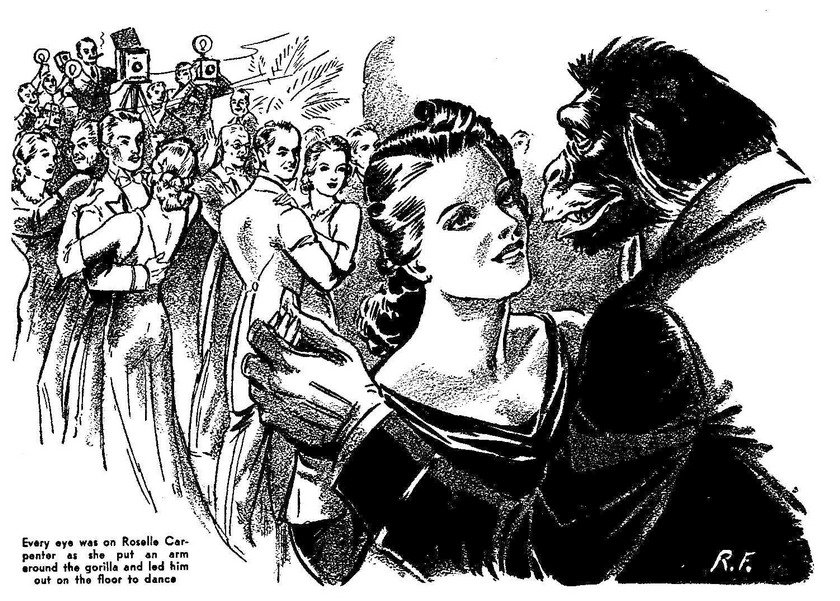
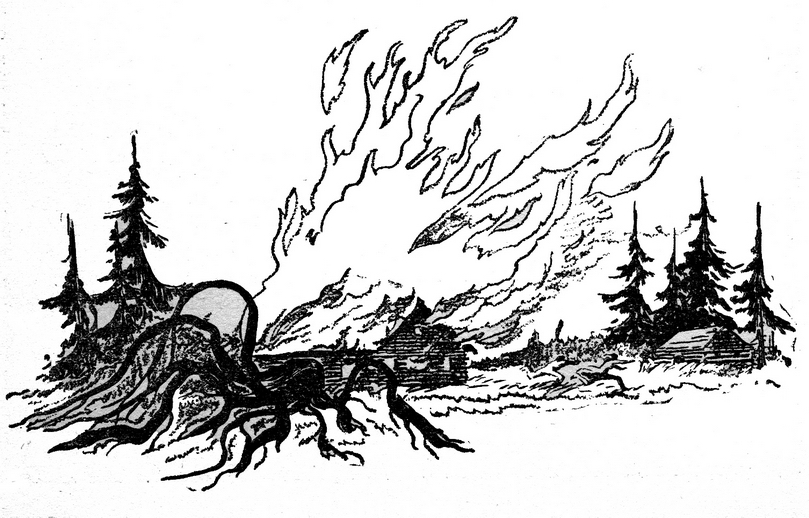
From Fantastic Adventures (May 1940). Story by Don Wilcox. Cover painted by Stockton Mulford. Interior illustrations by Robert Fuqua.
Saturday, April 26, 2008


Saturday, August 26, 2006
Lanterns on the Loose: Gullivar Jones and Kyle Rayner
In the early 1970's, seeing the success of such publishing franchises as their adaptations of Conan the Barbarian and the revival of the Edgar Rice Burroughs Tarzan and John Carter of Mars novels, Marvel was seeking properties other than Conan and Kull to turn into what they would hope would be another popular fantasy character. After a search for suitable (and presumably inexpensive) characters to promote, Marvel and Roy Thomas chose the long-forgotten character of of Gullivar Jones, from the 1905 book Lt. Gullivar Jones: His Vacation by Edwin L. Arnold. By most accounts the book, when originally published, did not sell well. It soon was remembered only by science fiction aficionados as having pre-dated the Edgar Rice Burroughs' A Princess of Mars by several years. SF historians still debate if the earlier book influenced the latter due to similarities in the stories. If nothing else, Arnold's book sales probably suffered from poor marketing caused by a title that was far less dynamic and sexy than the Burroughs novel.
Beginning in 1972, Marvel showcased the character of Gullivar Jones, Warrior of Mars in issues #16-21 of the reprint anthology title Creatures on the Loose, which later featured the likewise-forgotten Conan-clone Thongor and Man-Wolf.
The parallels in the work of Arnold and Burroughs are best left to nit-picking literary scholars. I am much more interested in the similarities in the work of Arnold and Green Lantern scribe Ron Marz, who unfortunately gave us the Green Lantern known as Kyle Rayner.
While re-reading some 70's Marvel goodness to re-ignite my love of comic books (the flame of which has been snuffed by months of ho-hum-nicity) I noticed that there are striking parallels to the origins of Gullivar Jones and the Kyle Raynor Green Lantern.
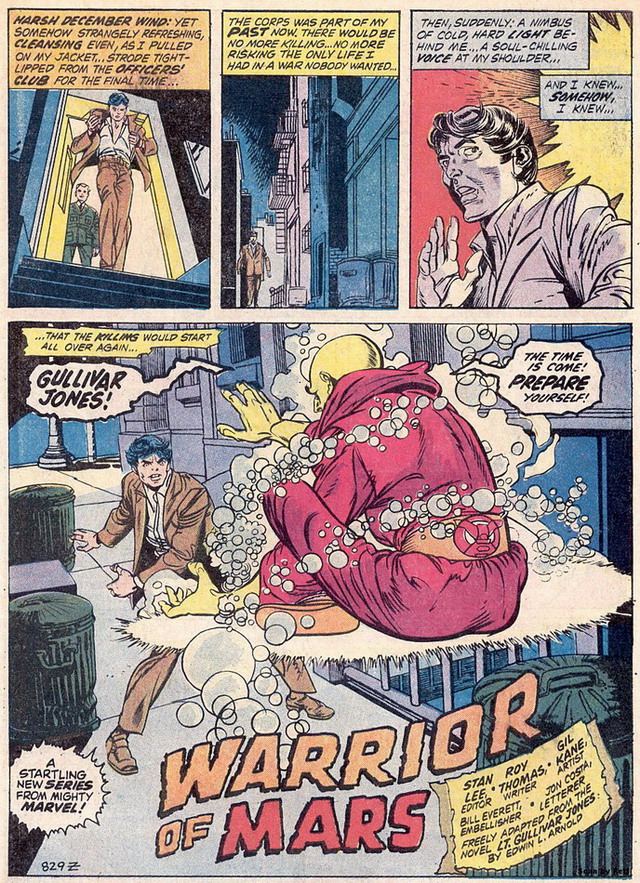
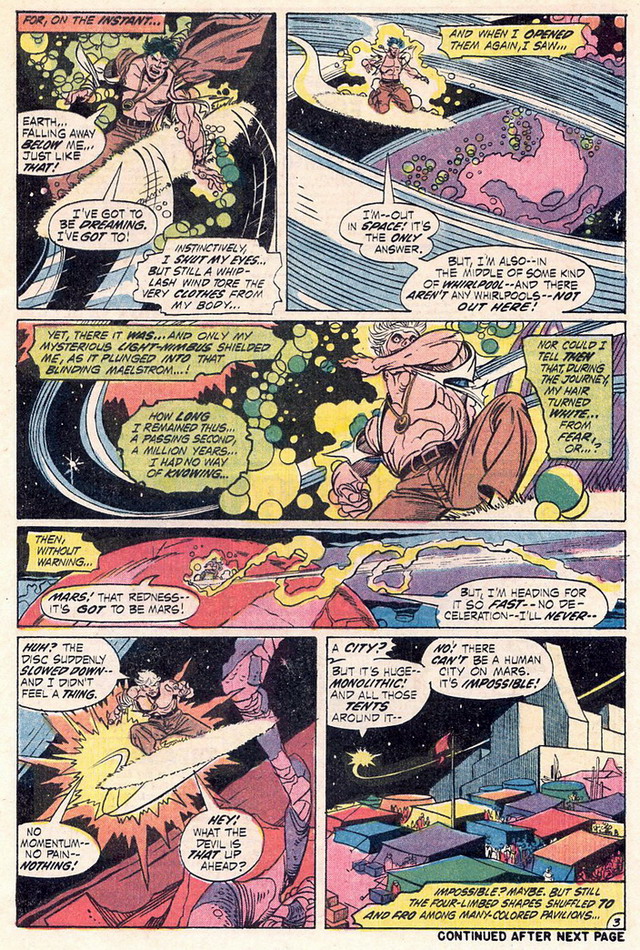
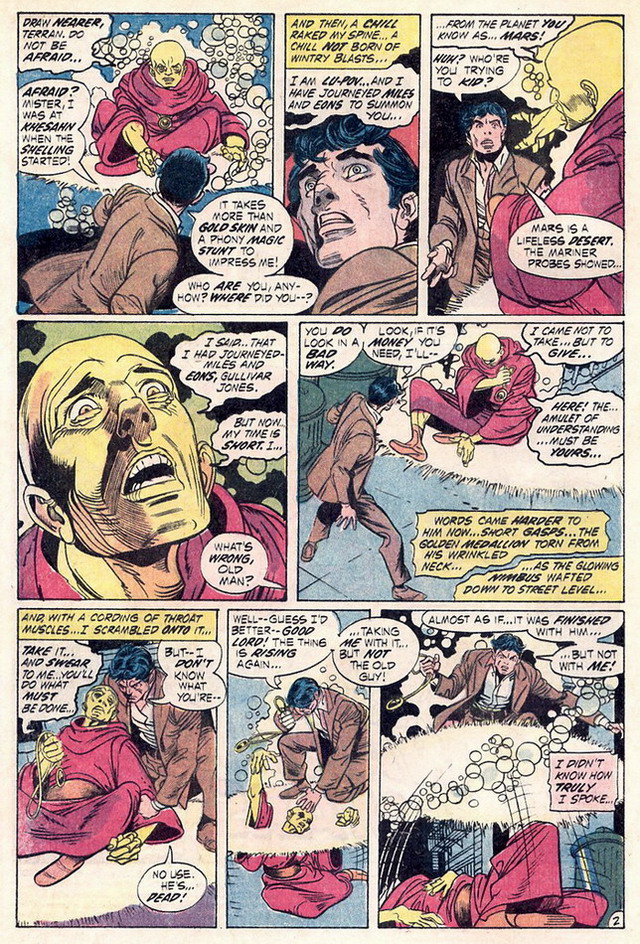
Here is Gullivar Jones' origin as a Warrior of Mars, from Creatures on the Loose #16 (March 1972).
And here is Kyle Rayner's origin as an intergalactic law enforcement agent from Green Lantern #50 (March 1994)
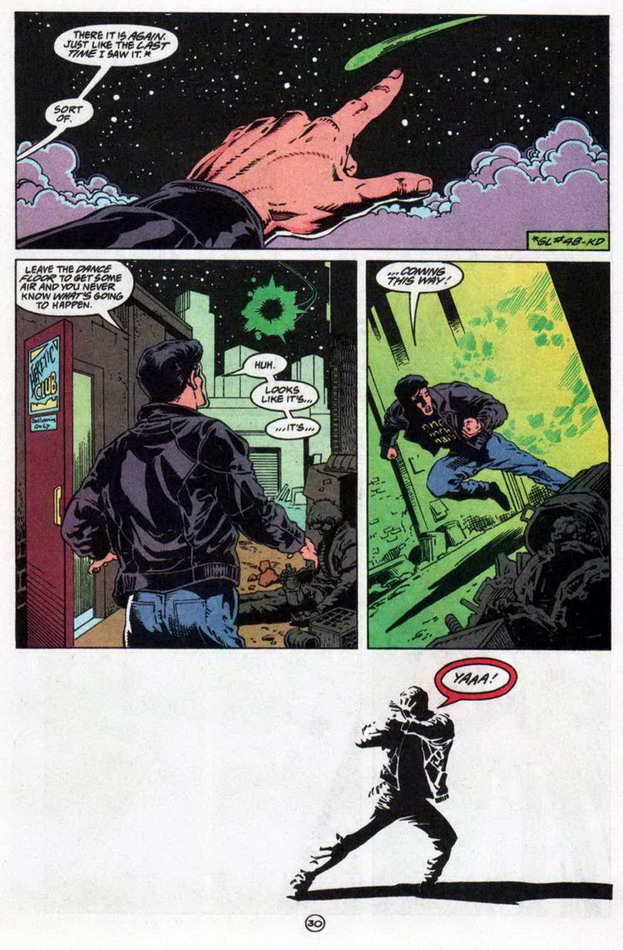
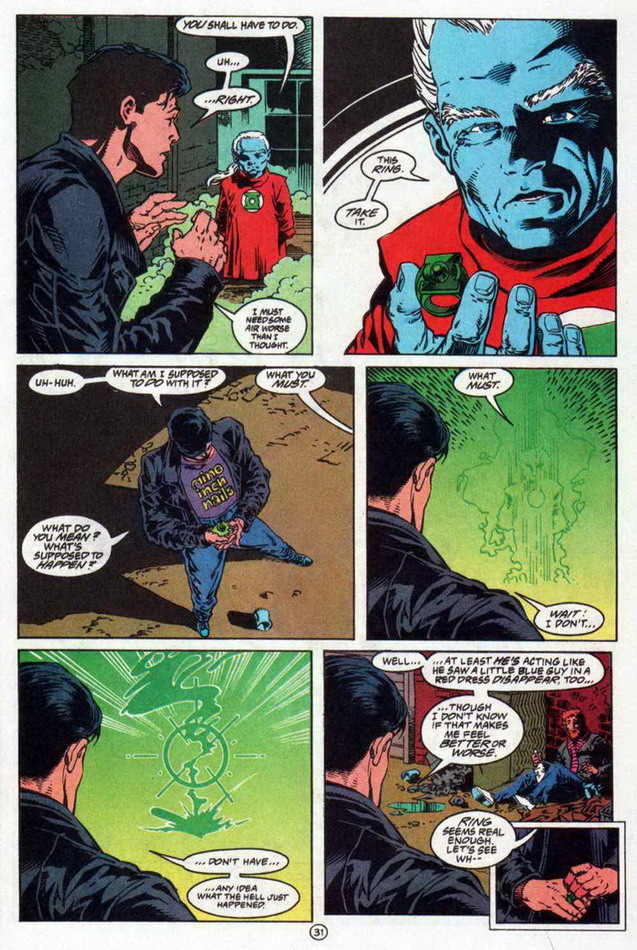

Interesting, yes? Let's go down the checklist...
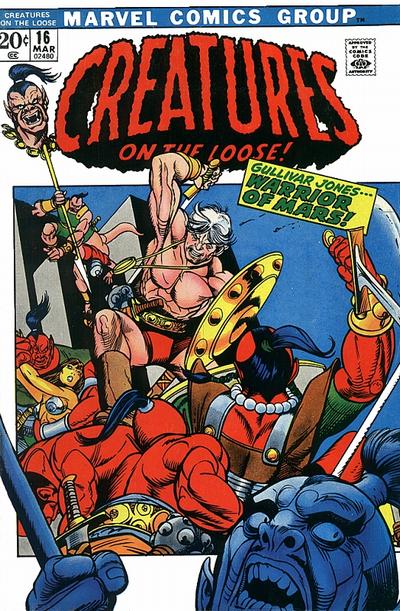
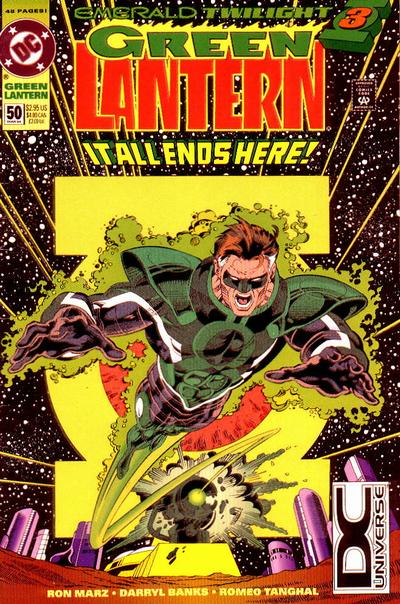
Beginning in 1972, Marvel showcased the character of Gullivar Jones, Warrior of Mars in issues #16-21 of the reprint anthology title Creatures on the Loose, which later featured the likewise-forgotten Conan-clone Thongor and Man-Wolf.
The parallels in the work of Arnold and Burroughs are best left to nit-picking literary scholars. I am much more interested in the similarities in the work of Arnold and Green Lantern scribe Ron Marz, who unfortunately gave us the Green Lantern known as Kyle Rayner.
While re-reading some 70's Marvel goodness to re-ignite my love of comic books (the flame of which has been snuffed by months of ho-hum-nicity) I noticed that there are striking parallels to the origins of Gullivar Jones and the Kyle Raynor Green Lantern.
Here is Gullivar Jones' origin as a Warrior of Mars, from Creatures on the Loose #16 (March 1972).
And here is Kyle Rayner's origin as an intergalactic law enforcement agent from Green Lantern #50 (March 1994)
Interesting, yes? Let's go down the checklist...
- Disaffected protagonist leaves club: Check!
- Enters spooky alley: Check! (though Gullivar probably entered the alley for different reasons than Kyle).
- Visited by extraterrestrial: Check!
- Given gift of Scienti-magic talisman: Check!
- Charged with mission to save worlds: Check!
- Alien dies: Check!
- Reluctantly accepts said mission: Check!
Subscribe to:
Posts (Atom)