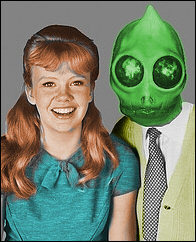
Yvonne Craig circa 1967 via

+-+p0029.jpg)

Mars was the featured character of an earlier and respected Planet Comics serial. In those stories, the evil Mars would travel the galaxy and possess different people, forcing them to commit horrific acts and spread terror and strife all in the name of conflict. What made this serial different is that often Mars would emerge victorious being defeated only after spreading widespread chaos.
In Planet Comics #35 Mars is waging a war against science and intellectualism when he crosses paths with Mysta and her brother. While this story details Mars' greatest success, effectively destroying human civilization, it also marks the marginalization of the Mars character as the far more visually appealing Mysta is brought to the forefront as the protector and savior of humanity. By the following issue Mysta headlined her own series and Mars was delegated to only a final cameo.
Out of all the female characters featured in Planet Comics it is Mysta of the Moon that was the strongest in terms of characterization. Unlike many other contemporary characters Mysta largely stood on her own in her adventures. Typically in almost any comic book tale of the era, where a female would often act as the lead in a story it was not unusual to have a man show up near the end of the tale and take charge, wrapping things up as the female character shed angst-filled thought balloons expressing gratitude and unrequited love. Among the Planet Comics entries this was most common among the Gale Allen serial. Mysta, being the most intelligent person in the Universe, would have none of that even though the creative team in the beginning used the "Diana Prince" trope and there is a greater than average amount of gratuitous cheesecake in the stories. Anyone interested in researching a good example of early female empowerment in comic books could do worse than reading the Mysta of the Moon series.
Like many superheroes Mysta, who was the repository of all knowledge, maintained a secret identity so the public at large would not know she was acting as their savior and defender. In her guise as an older and unappealing librarian or technician, Mysta fought criminals, mutant zombies and solved mysteries with the aid of a lab assistant and an unstoppable robot with which she shared a telepathic link.


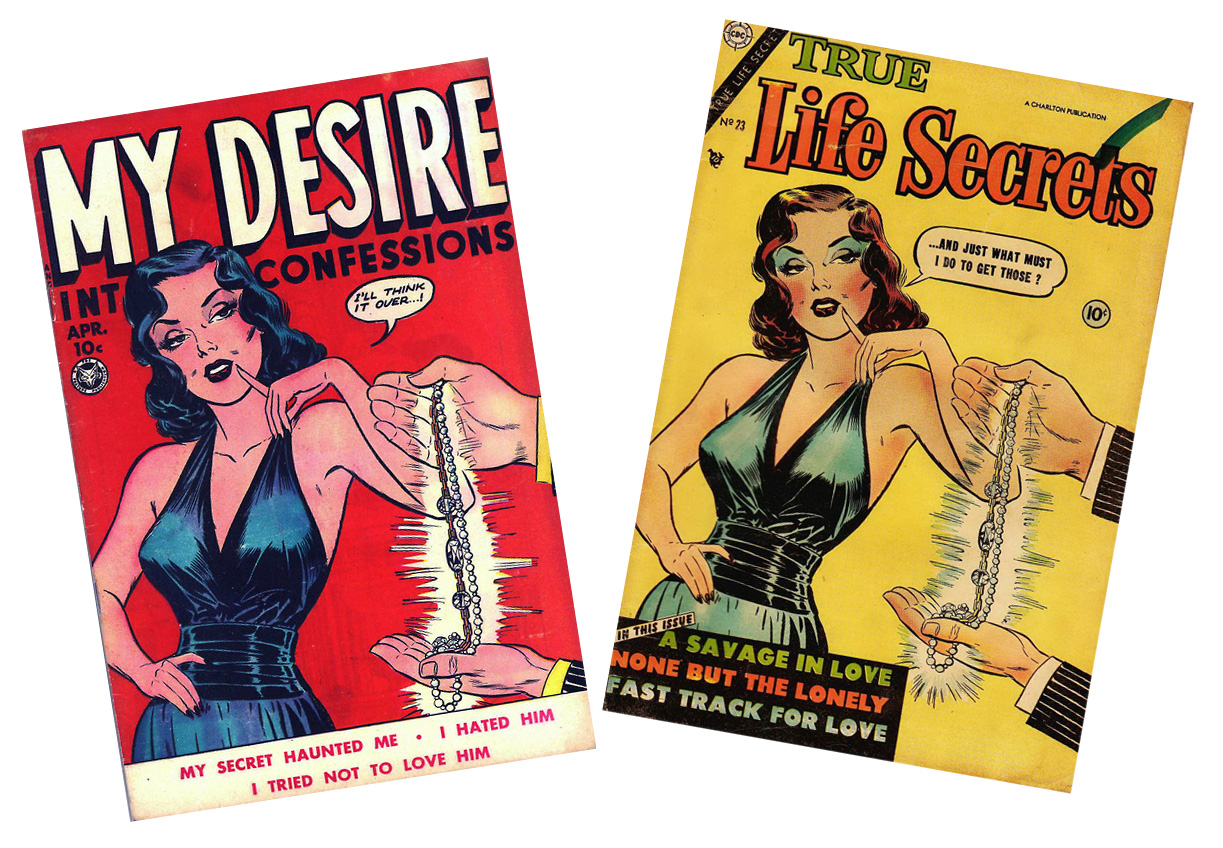
From My Desire Intimate Confessions #4 (Fox, April 1950) & True Life Secrets #23 (Nov-Dec 1954).
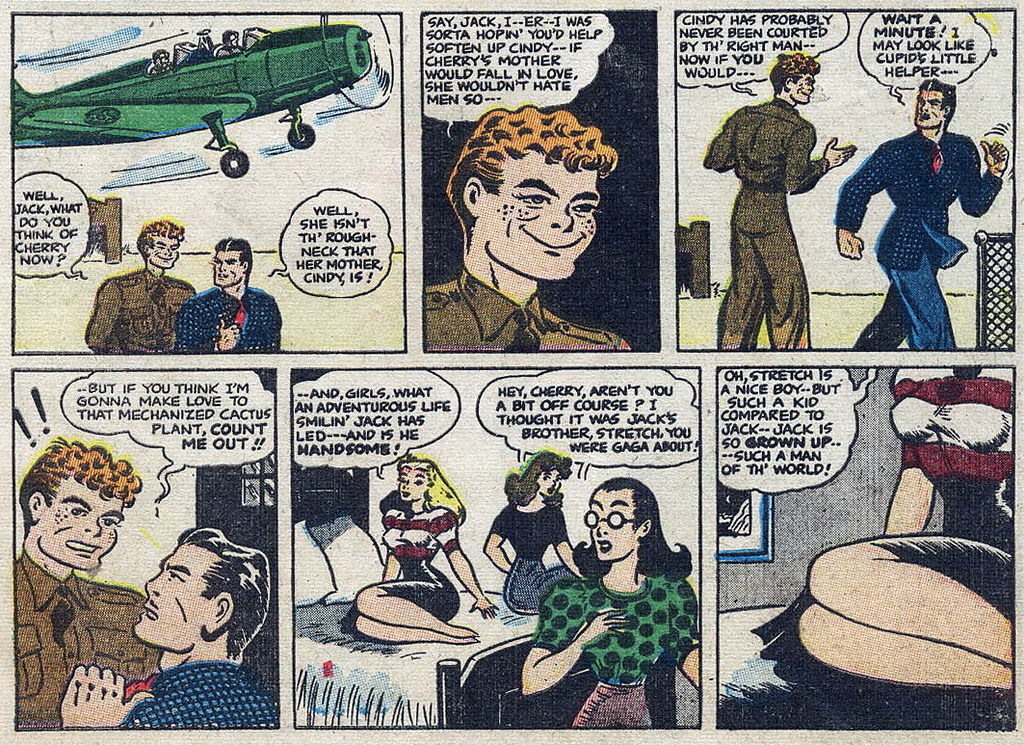
Smilin' Jack story re-printed in the Dell title Popular Comics #101 (May 1946).
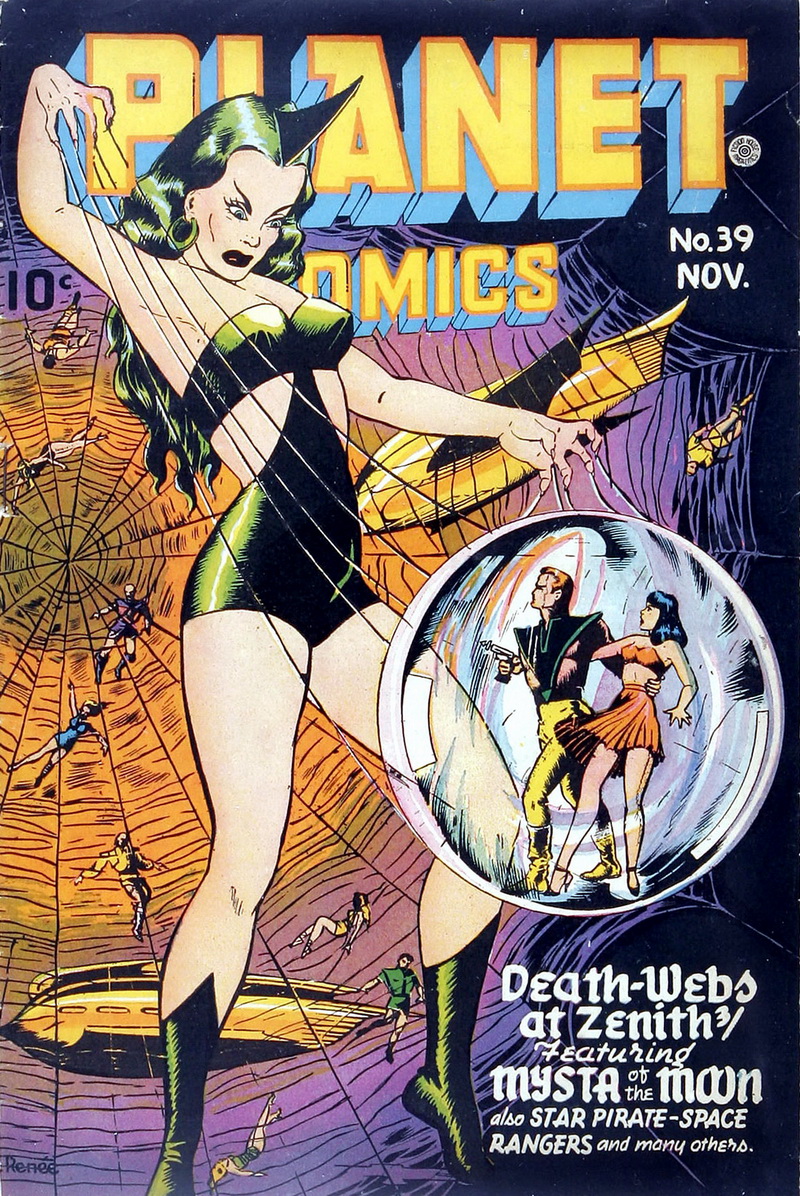 Cover of Planet Comics #39 (November 1945), drawn by Fiction House creative talent Lily Renee. I want this cover on a t-shirt or a big glossy framed poster for my wall. Or both.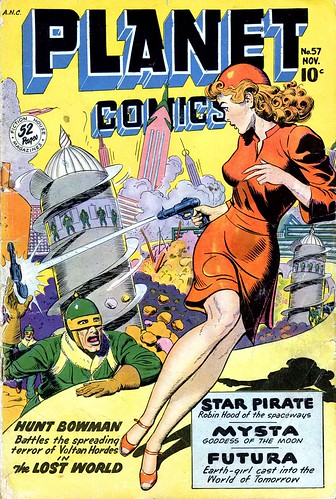
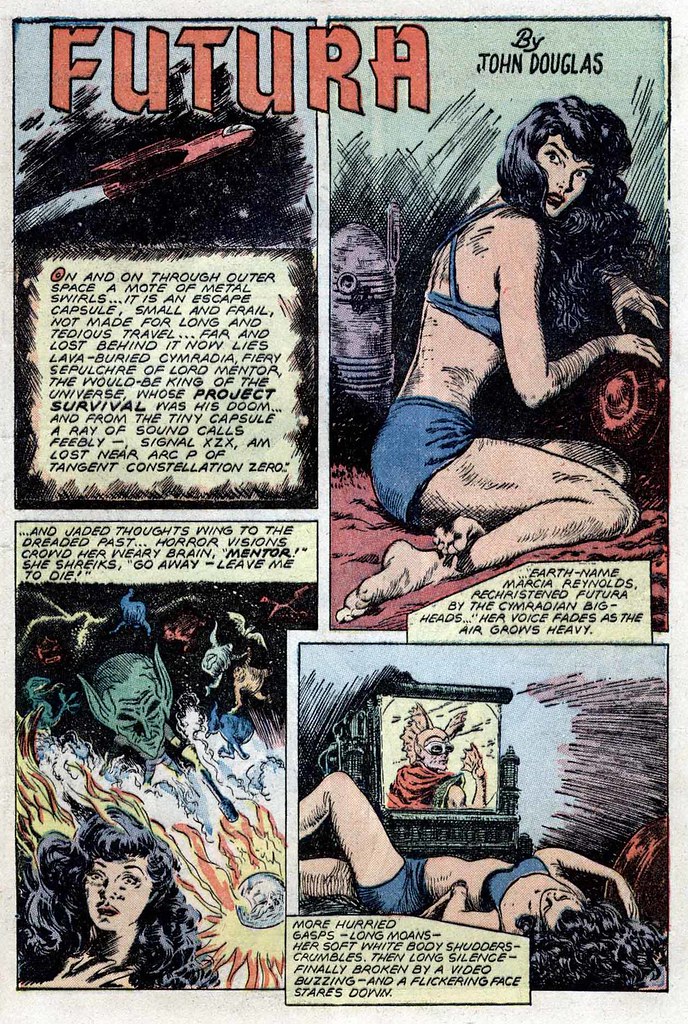
Chapter 15 of the Futura Saga is another example of the creators being unique in ignoring the usual gender roles for the fiction of this era. It was a rare episode that Futura didn't take stock of a situation and then promptly proceed to bust some heads for the greater good even if on occasion the results was less than satisfactory, such as the "Magic Sword" story arc in which she freed a people from subjugation only to destroy them all by unnatural disaster.
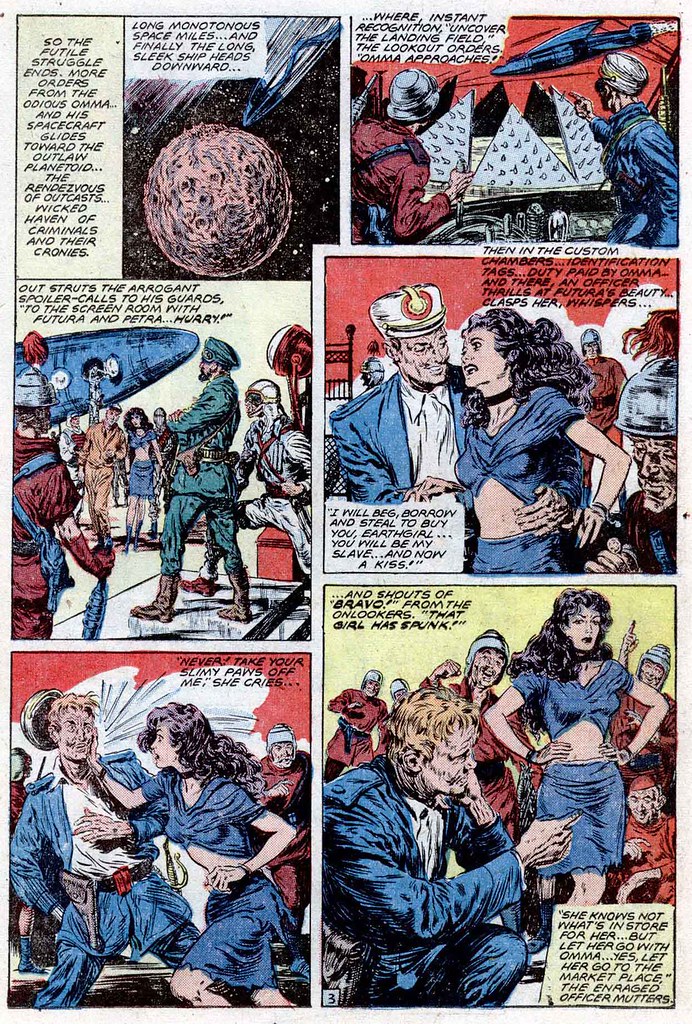
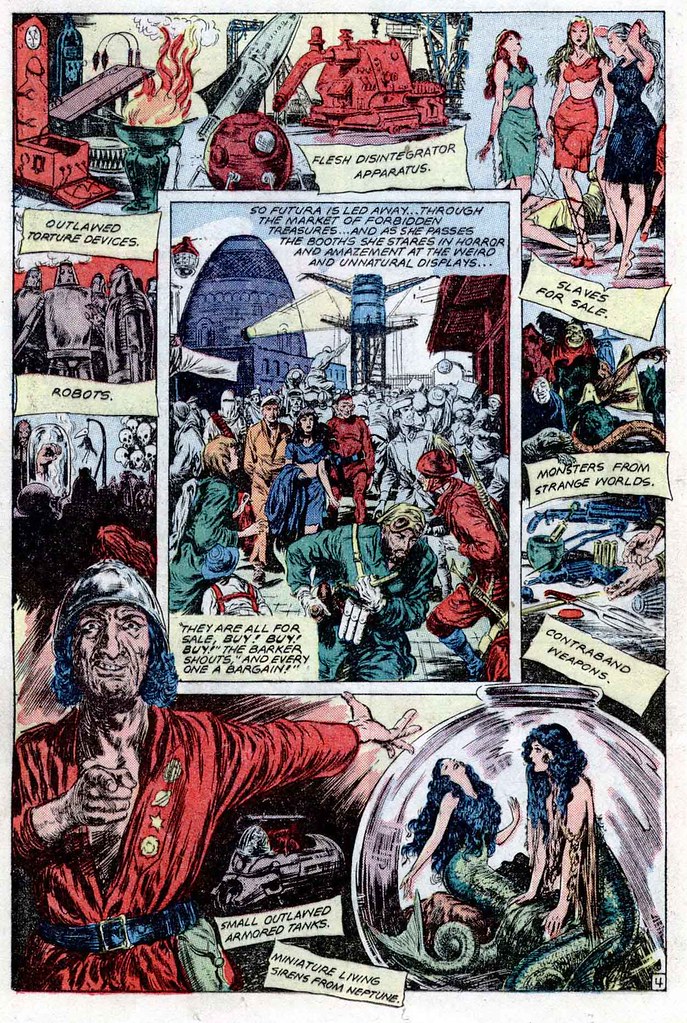
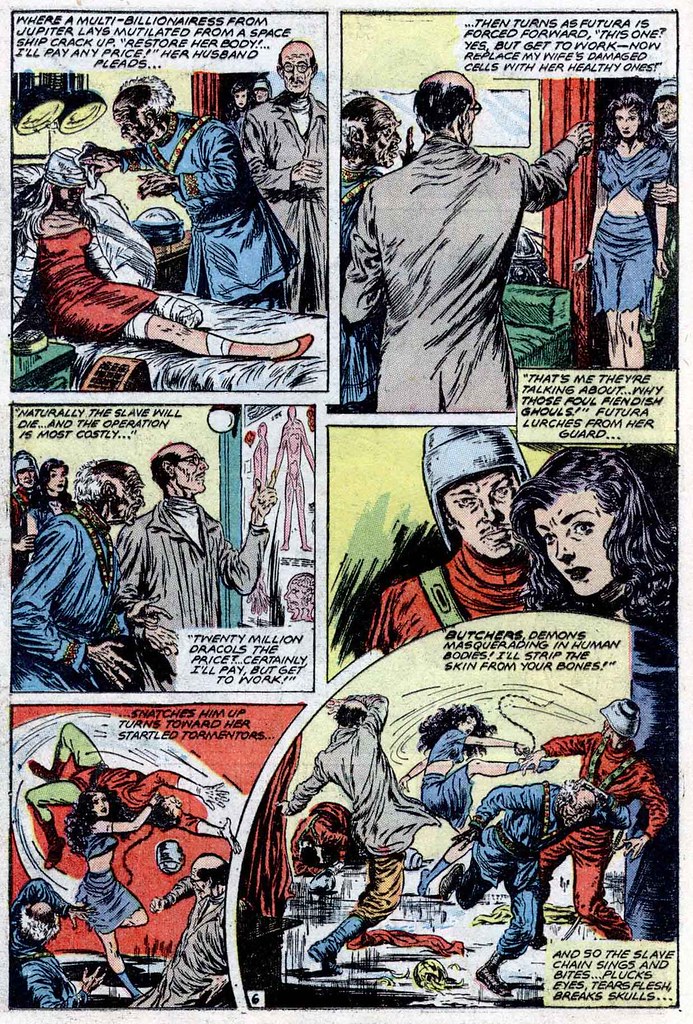
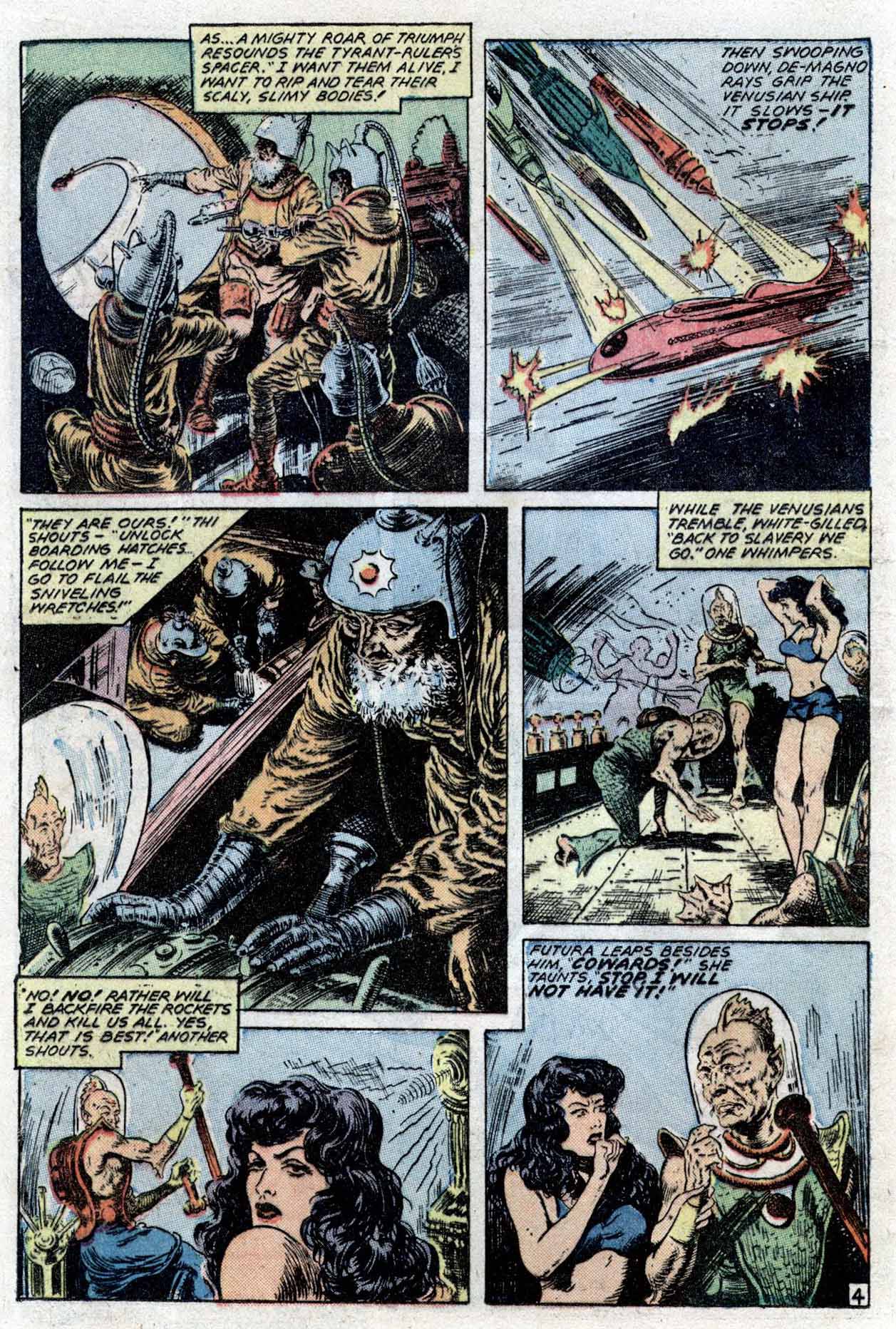
Planet Comics #57 (November 1948) features the creators really hitting their pace in telling the Futura story. It is a fun episode and the art and script are great. The page depicting the alien slave market is worthy of a pin-up on its own and is reminiscent of later John Buscema establishing pages from various Conan the Barbarian stories. Gloriously, Futura opens up a gigantic can of whup-ass in this chapter and splashes the contents around with a frenzy. It is a testament to her ability to beat on her enemies that she received a full extra page of butt-kicking action beyond the number her story usually received each issue. The bad-guys still don't seem to communicate among themselves much because they continue to let Futura within arms reach of pointy things, guns and chairs. This is such a basic error in tactics when going up against Futura that one would speculate a galaxy-wide alert would be broadcast like a Kansas tornado warning just in case some pirate or corrupt government official happened to cross paths with her.
It is with this issue that the story seems to find direction and becomes larger in scope. Some of the old comic book science fiction tropes are discarded and the tale becomes something that could later be called Heinlein-esque. This is something of a shame because there are not that many entries left in the Futura Saga. The state of the comics industry would bring in a few short years a close to many of the classic comic book titles that had been in publication for decades.
Safety goggles recommended when reading. Enjoy!
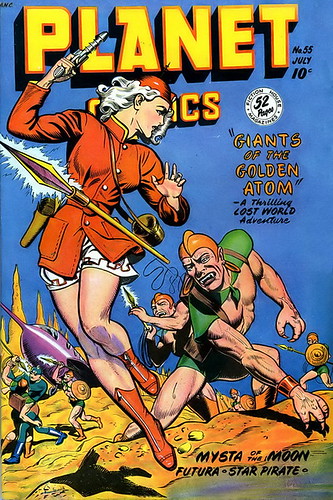
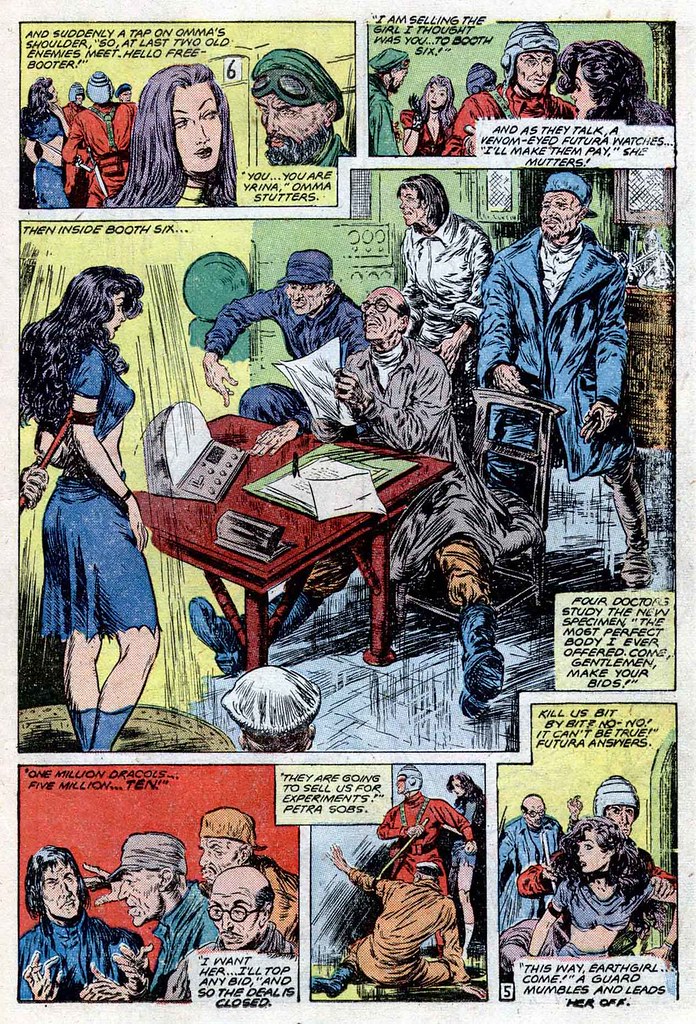
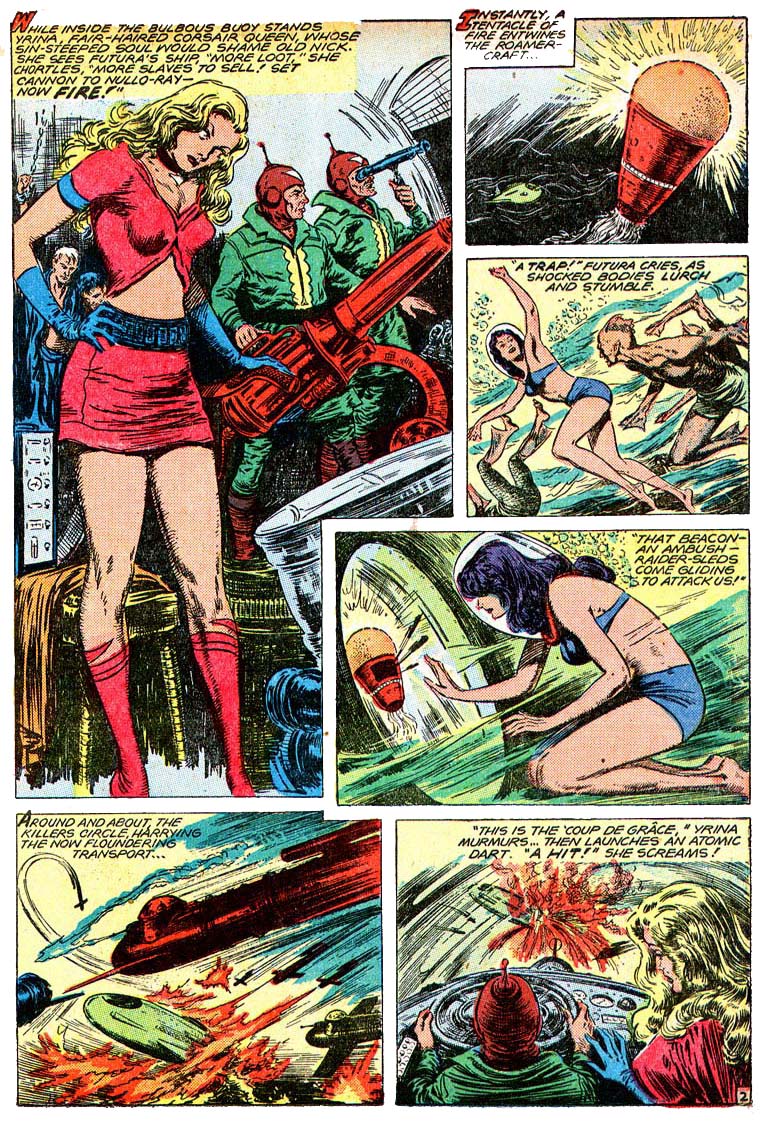
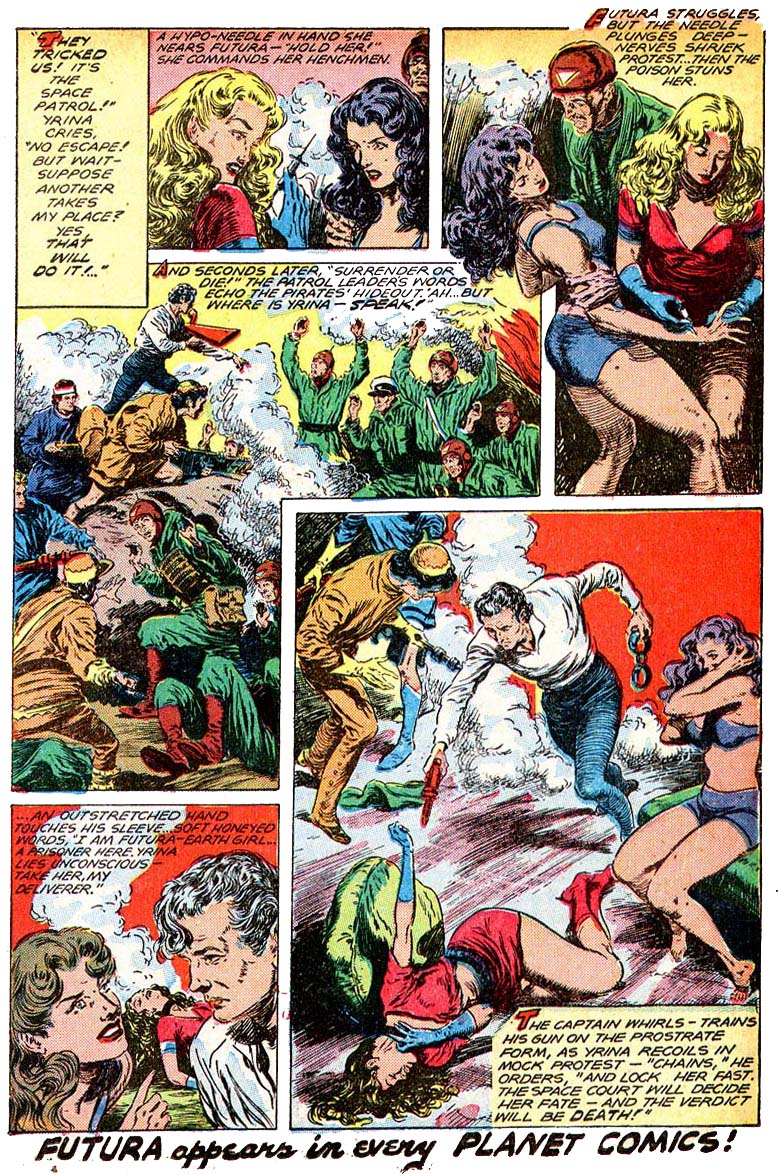
When Yrina is first revealed her pose is identical to that of one made by Futura from Chapter 12. That Futura and Yrina appear alike when introduced is more than an example of that economical, deadline-induced style that Fiction House demonstrated so often. While some could dismiss the panel layouts as derivative of previous artwork what is clear is that Yrina is a crafty pirate and the artist drew a similarity between the two women that was, perhaps unconsciously, for a reason. Chapter 13 of the Futura Saga may be a lesson for the title character: That the protagonist and antagonist may differ only by the choices they made and the paths taken.
Enjoy!
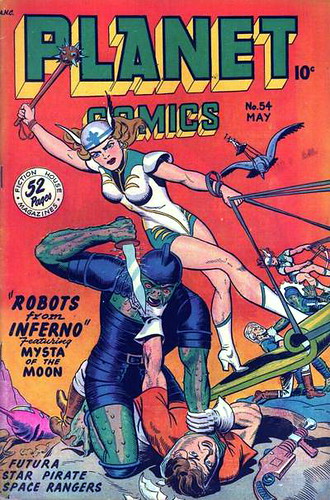
As the elements of science fiction evolved so did the various stories in the Planet Comics title as a part of that evolution. The earnest naivete of the pulps gave way to a relative realism as technology prompted greater speculation as to what the future may be like. As the public was increasingly educated as to the true nature of the universe the more wild fictional elements were reigned in and fictional space travel was made ever more local and confined to the greater solar system. The settings of science fiction became more "plausible" even as it remained just as fantastic and impossible.
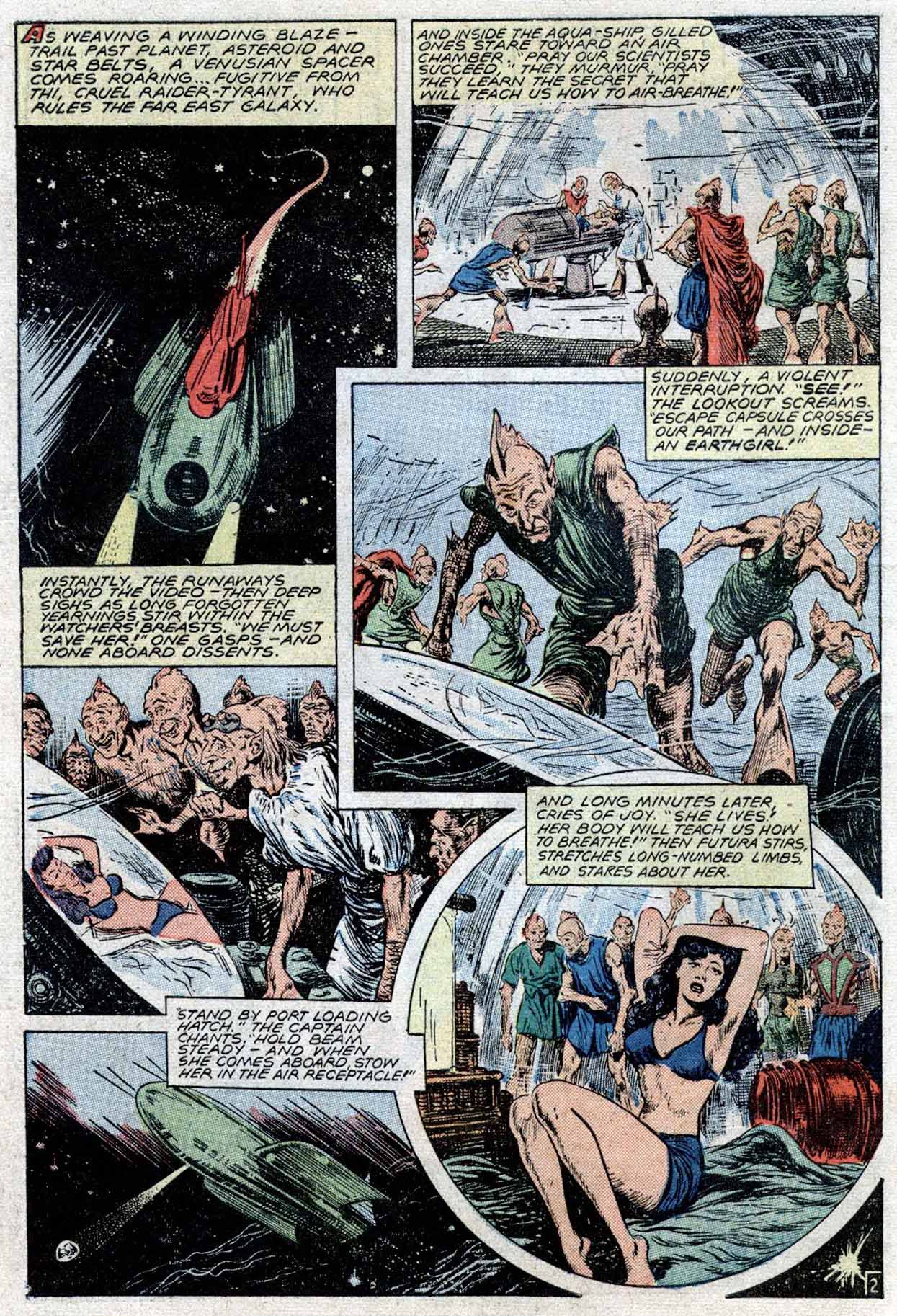
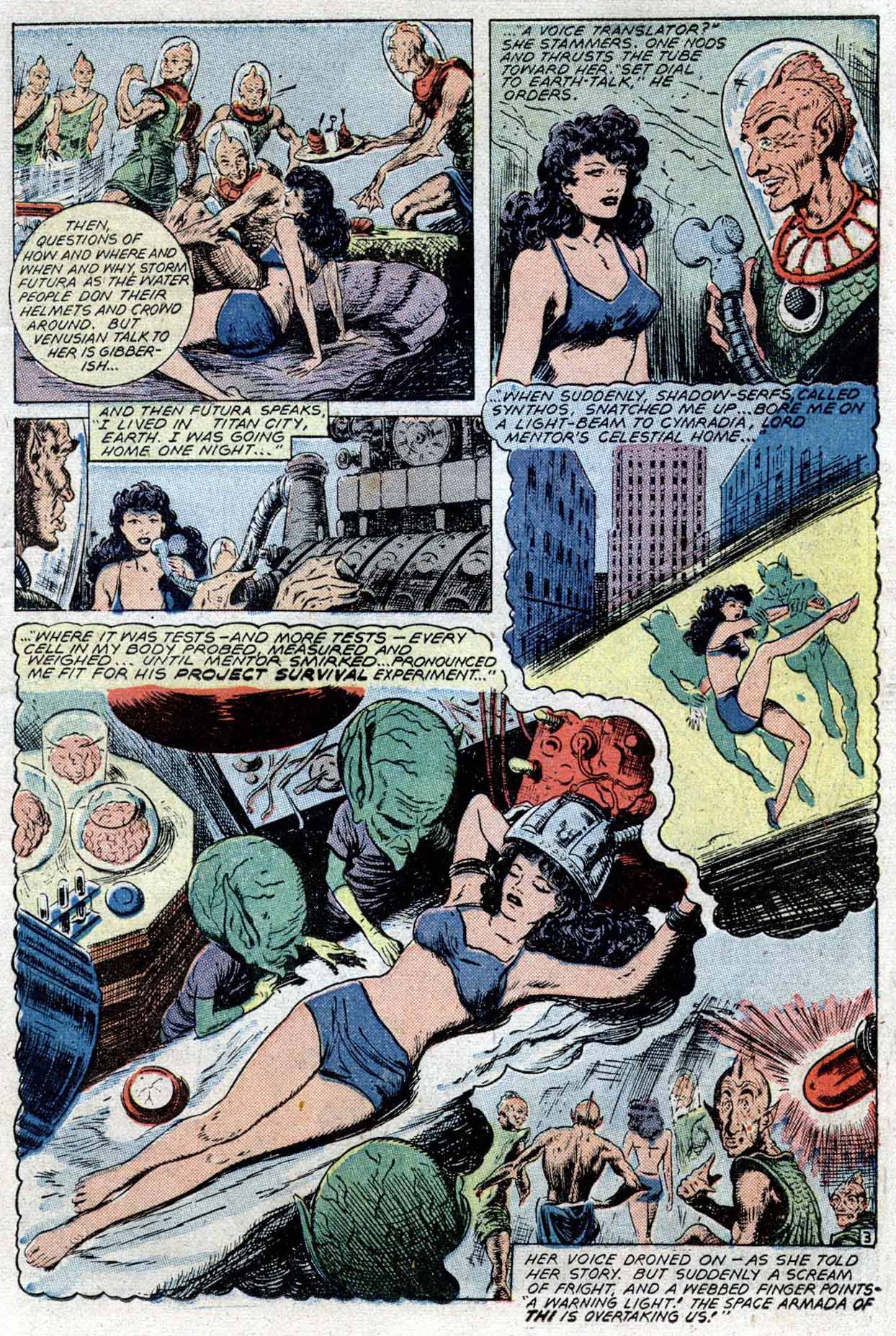
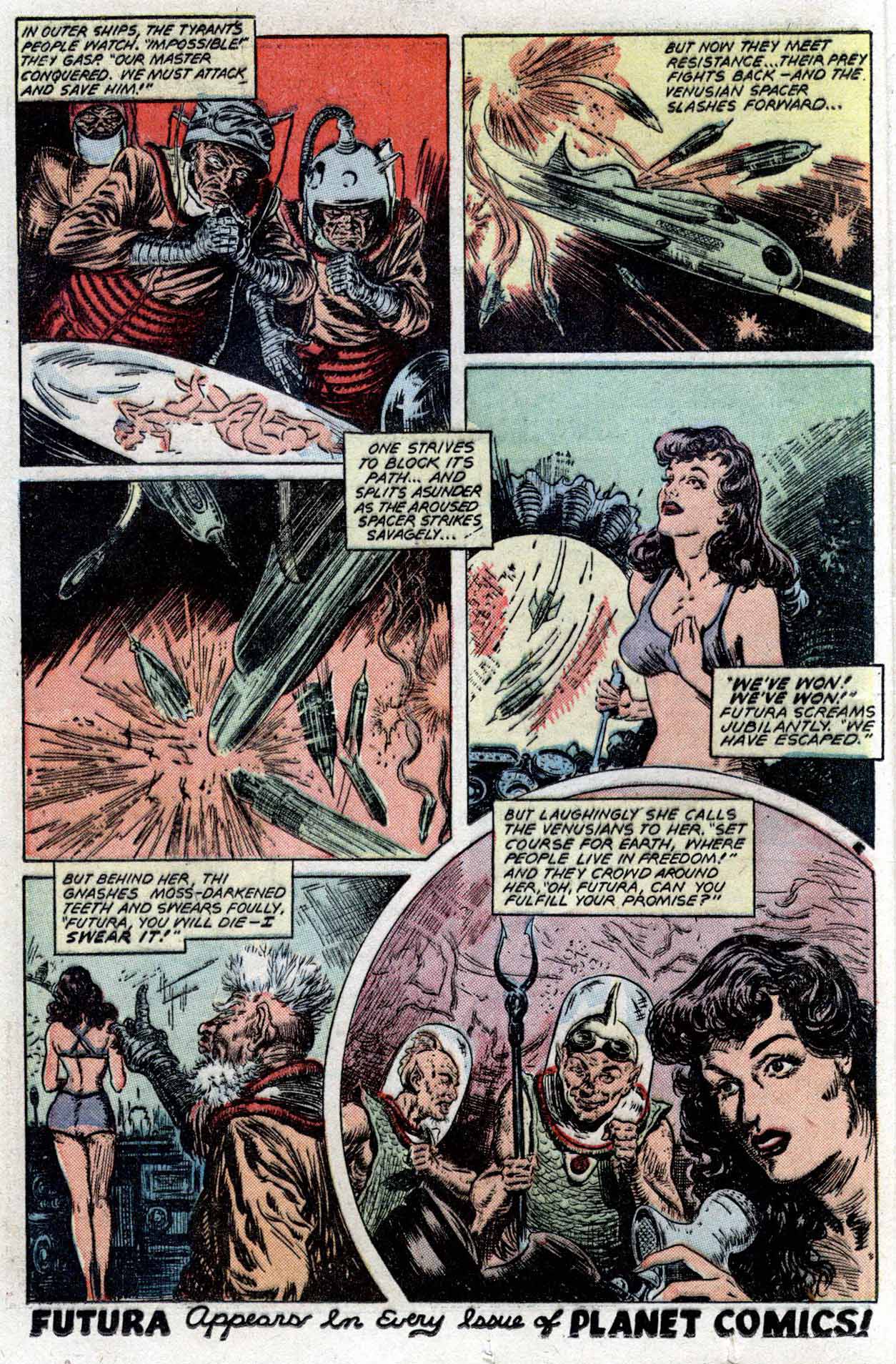
As the universe became more complex the story elements became inversely simplified. No longer did ships zoom to other galaxies and visit Cymradia or Mongo. Adventurers typically remained within the solar system as there were suddenly plenty of stories to be told featuring the wild, heavily populated planets of Mars, Venus and Saturn. Eventually these ideas would also fall to the wayside as readers recognized that Pellucidar and the feudal Mars of John Carter were unlikely in the "real fictional universes". Currently these problems of unlikelihood are solved by the concept of alternate realities and other dimensions such as DC Comics' Skartaris. The next entry in the Futura Saga from Planet Stories #54 (May 1948) is an example of the evolution towards "unlikely realism" in science fiction. The ideas of far-flung, magical planets like Cymradia are left behind in favor of Space Pirates plying the star lanes of Venus and oppressing the fish-like people of that planet.
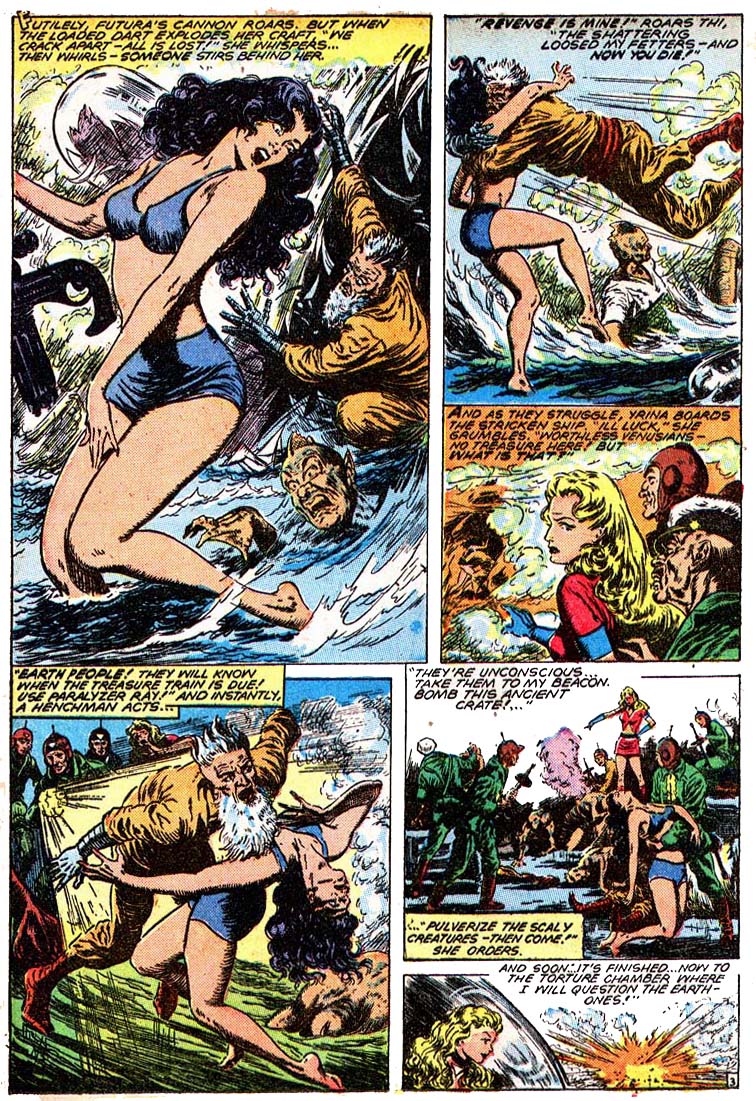
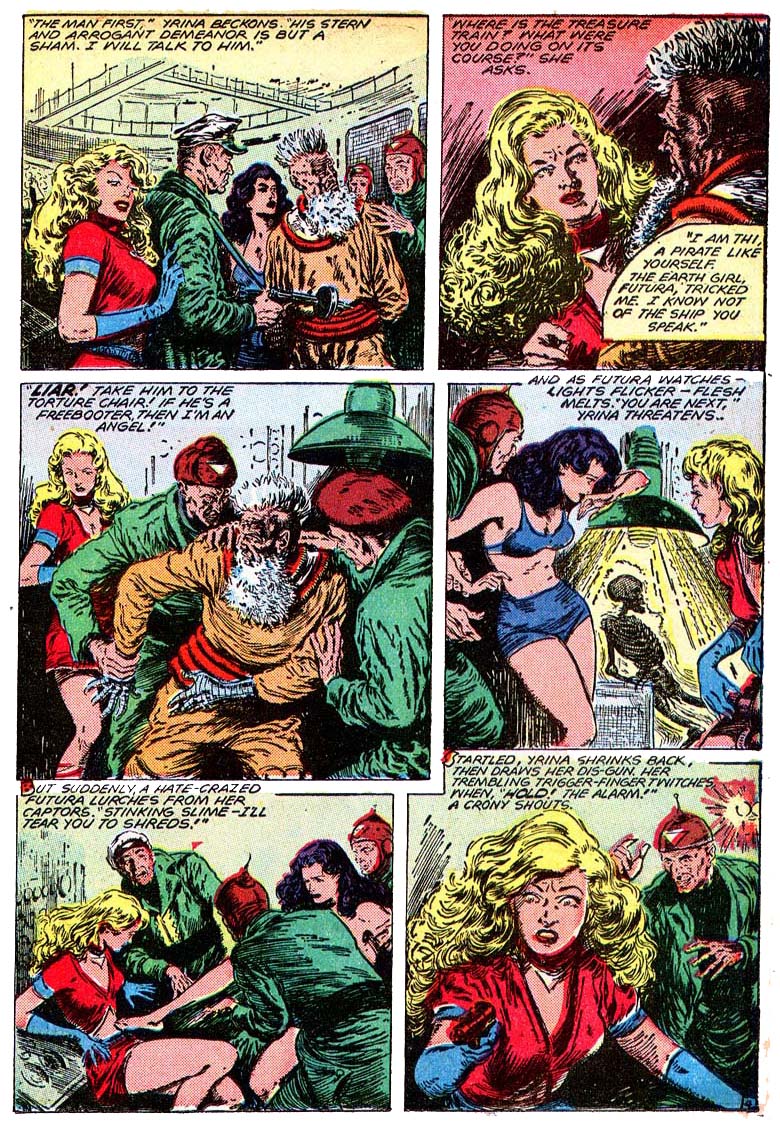
Chapter 12 of the Futura Saga finds our heroine continuing her journey into space, fleeing the world she inadvertently helped destroy in Chapter 11. Not having learned anything from her previous efforts to free oppressed people, Futura pledges to aid the Venusians in their struggles against a piratical tyrant. The art is a pleasing step up from the previous chapters and is a return to the style of the early Futura chapters and reminiscent of the Buck Rogers and Prince Valiant strips, though there are more than the usual number of gratuitous Good Girl Art poses than in previous entries.
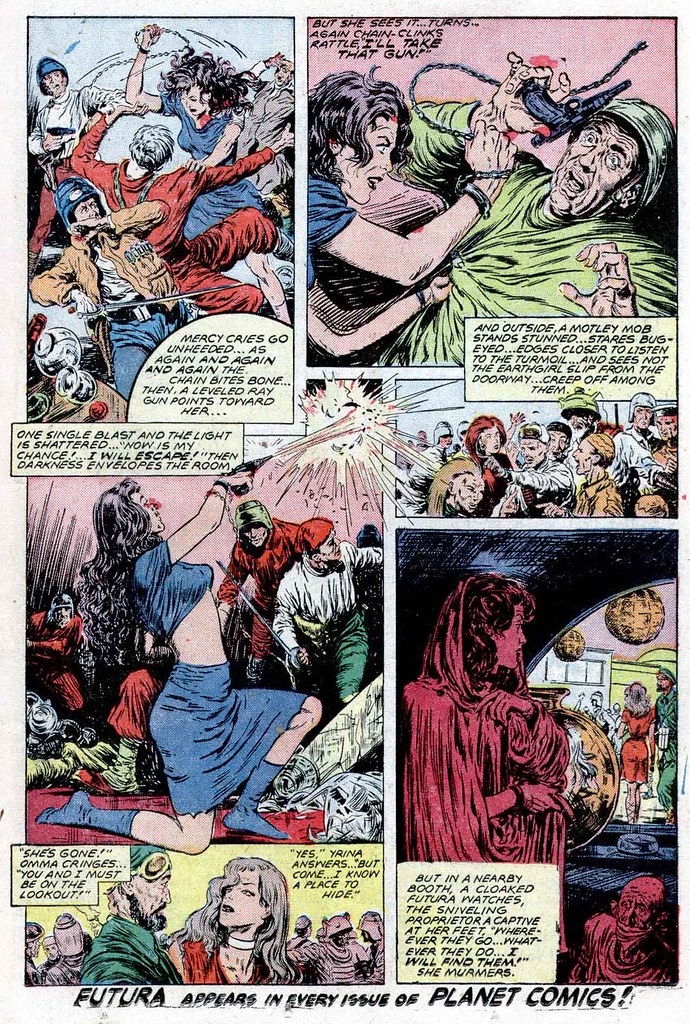
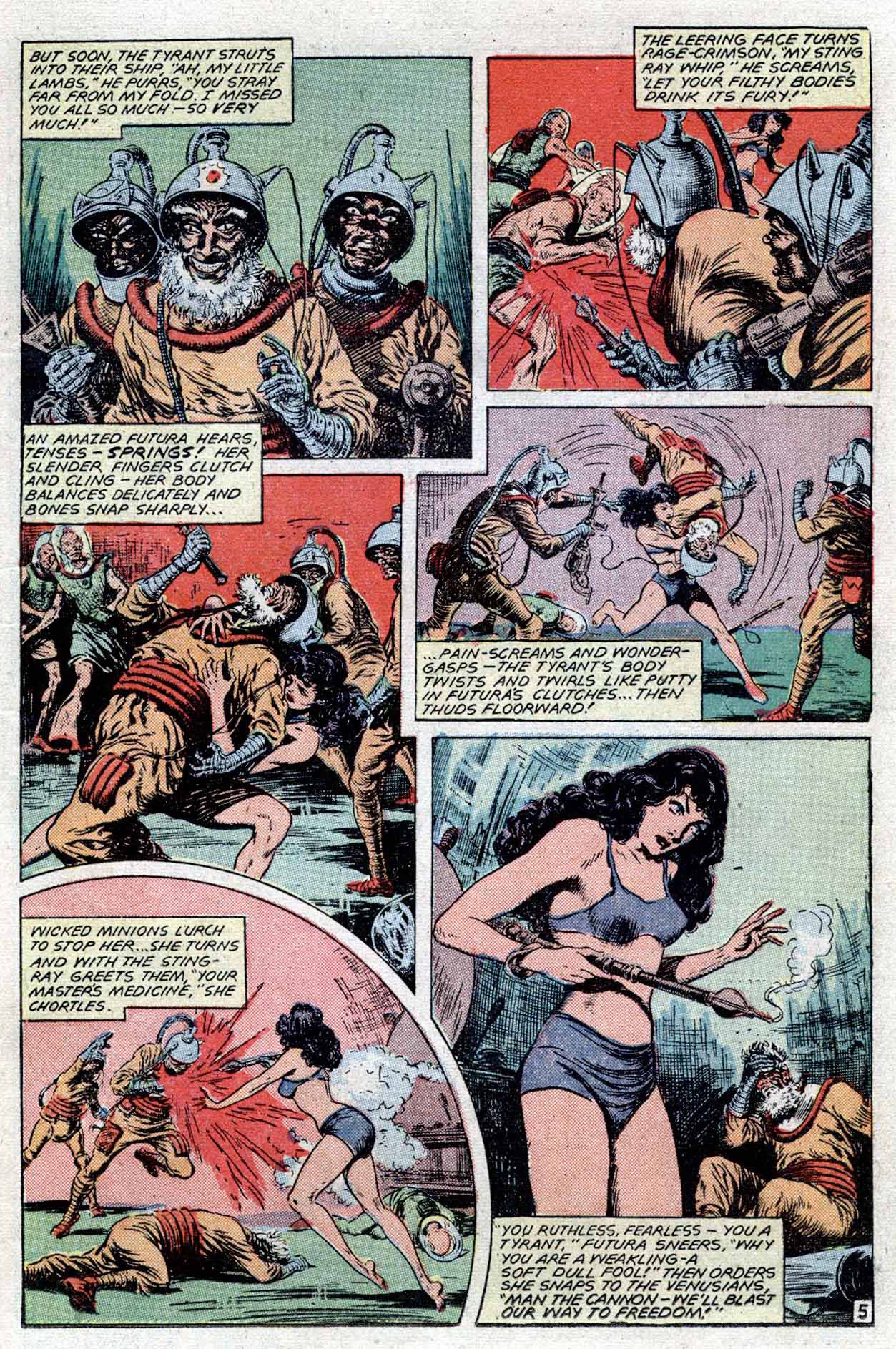
Happily, Futura does some serious butt-kicking in this chapter. Her fight scene is made made all the more interesting in that it was way back in 1948 that the creators chose to break the tiresome cliche of the "Helpless Captive" that still permeates most action fiction to this day. The cliche of the prisoner who nonetheless has access to weapons but doesn't use them is a sore point for me when watching a movie or reading the scene in a novel or comic book (I'll expound on that after Thanksgiving in a My First Book of Noir post, Jenny vs. The Crime Empire). It is so darn silly and is a sign of lazy scripting and false drama. I rank it right up there with the "Lucky Break" (When the weapon held by the bad guy jams right when he has the drop on the hero).
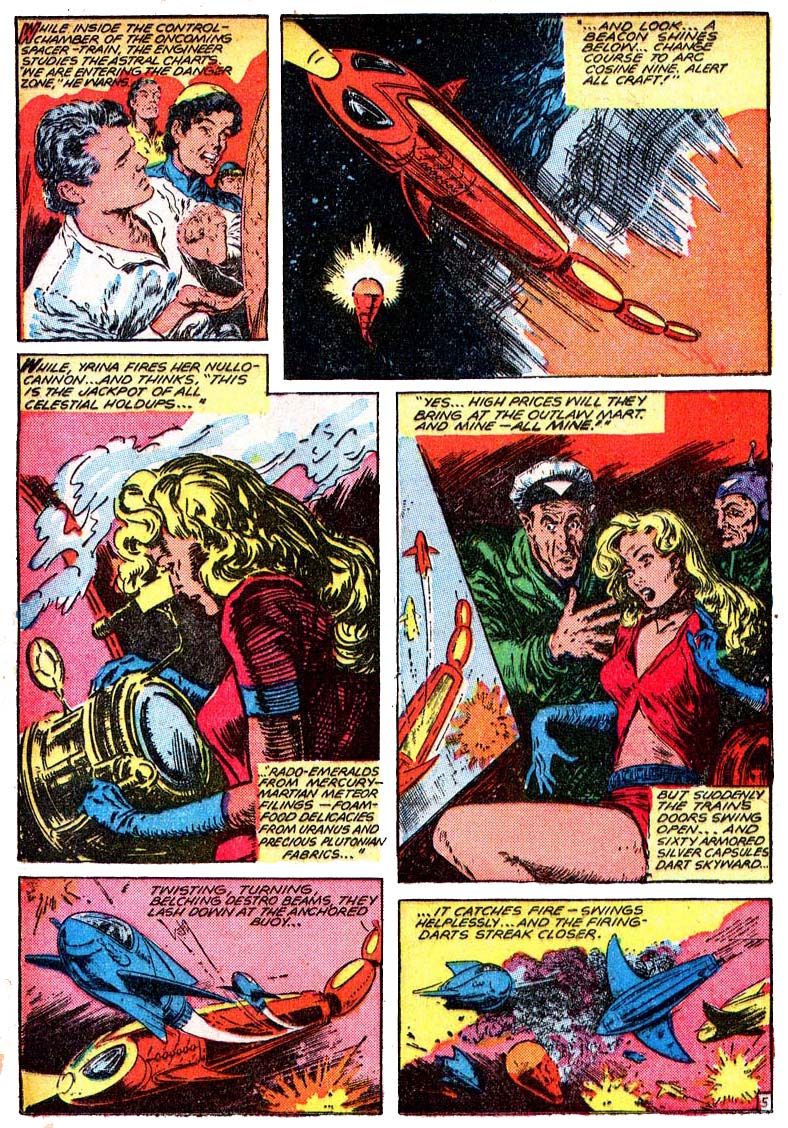
Page five is an utter delight. Enjoy.
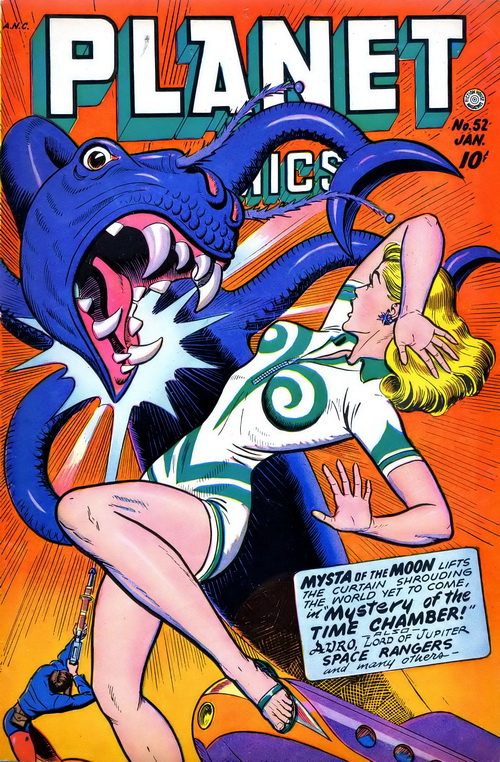
Mysta of the Moon was long-running science fiction adventure serial that ran in Planet Comics from 1945 to 1949. Mysta is perhaps the most consistent serial in regards to art and story quality to have been published by Fiction House. Mysta originally appeared as a young girl in issue #35 of Planet Comics as a victim of the machinations of Mars, the God of War, the star of an early and very popular Planet Comics serial. In those stories, the evil Mars would travel the galaxy and possess different people, forcing them to commit horrific acts and spread terror and strife all in the name of conflict.
Having survived an attempt to destroy her at the end of issue #35 an adult Mysta began her own feature with issue #36, effectively replacing the Mars series with her own. Like many superheroes Mysta, who was now the repository of all knowledge, maintained a secret identity so the public at large would not know she was acting as their savior and defender. In her guise as an older and unappealing librarian, Mysta fought criminals, mutant zombies and solved mysteries with the aid of a deadly, unstoppable robot with which she shared a telepathic link. Mysta eventually abandoned the pretense of a civilian disguise.
Out of all the female characters featured in Planet Comics it is Mysta of the Moon that was the strongest in terms of characterization. Unlike many other contemporary characters Mysta largely stood on her own in her adventures. Typically in almost any comic book tale, while a female would often act as the lead in a story it was not unusual to have a man show up near the end of the tale and take charge, wrapping things up as the female character shed angst-filled thought balloons expressing gratitude and unrequited love. Among the Planet Comics entries this was most common among the Gale Allen serial. Mysta, being the most intelligent person in the Universe, would have none of that. Anyone interested in researching a good example of early female empowerment in comic books could do worse than reading the Mysta of the Moon series.
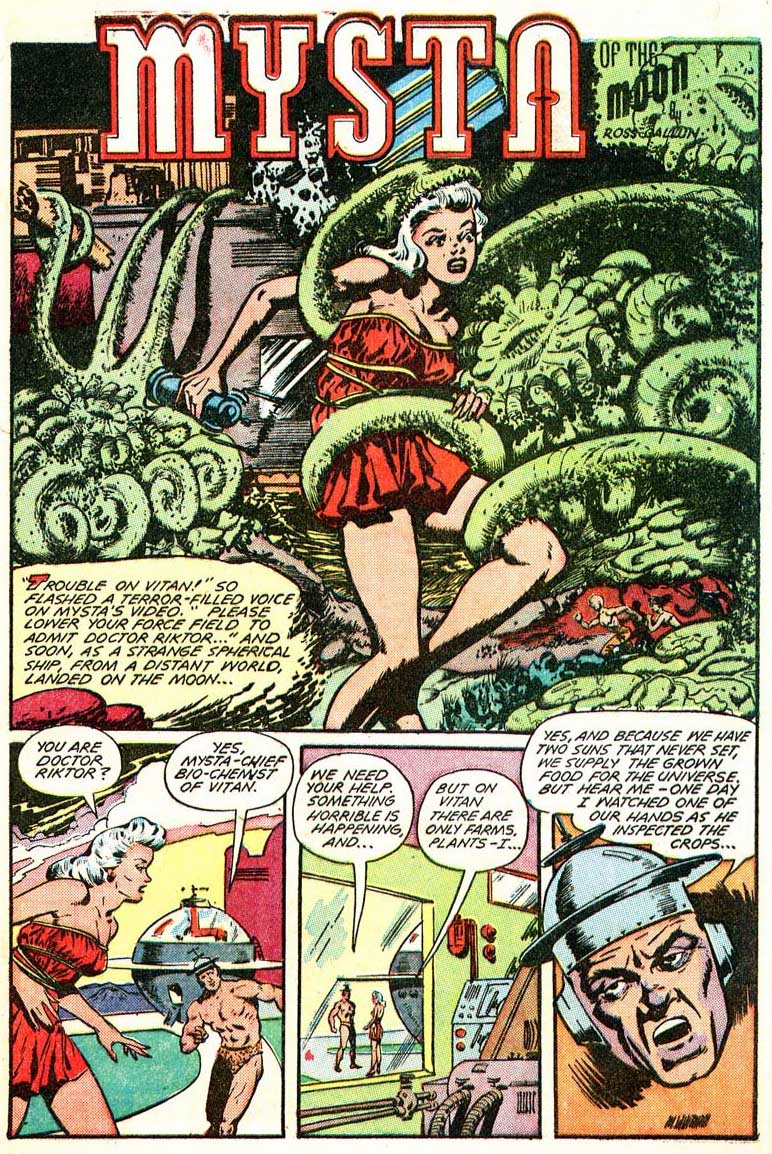
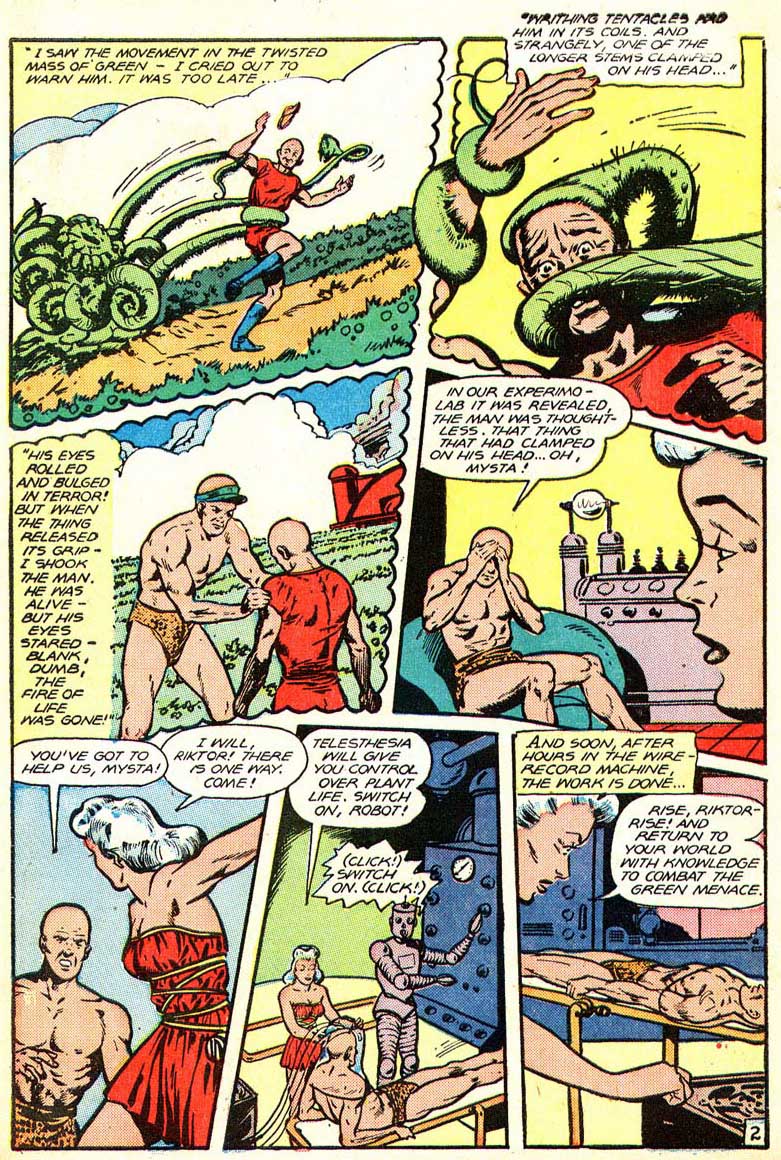
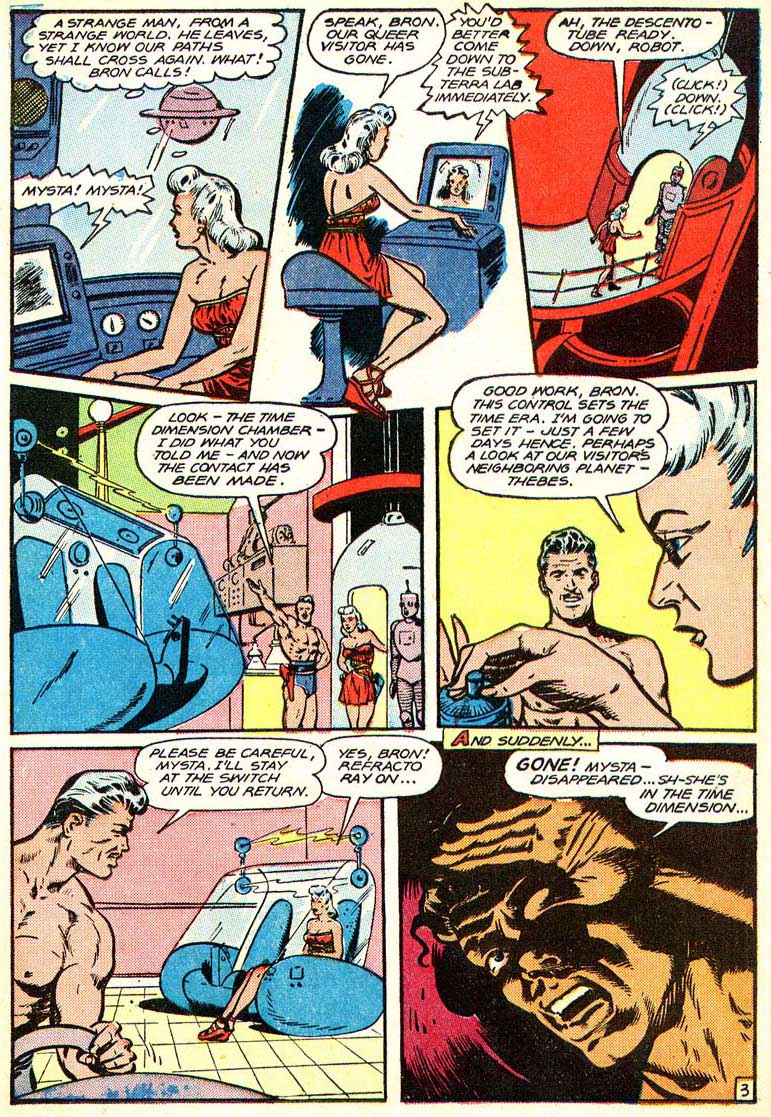
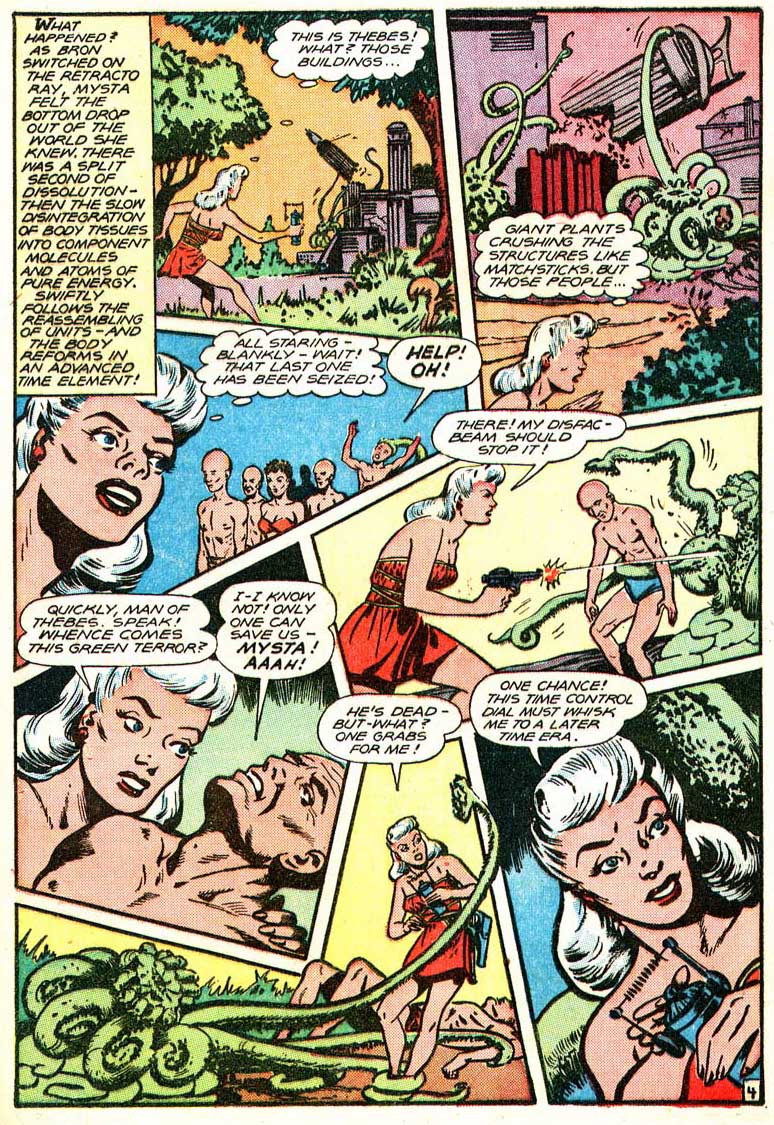
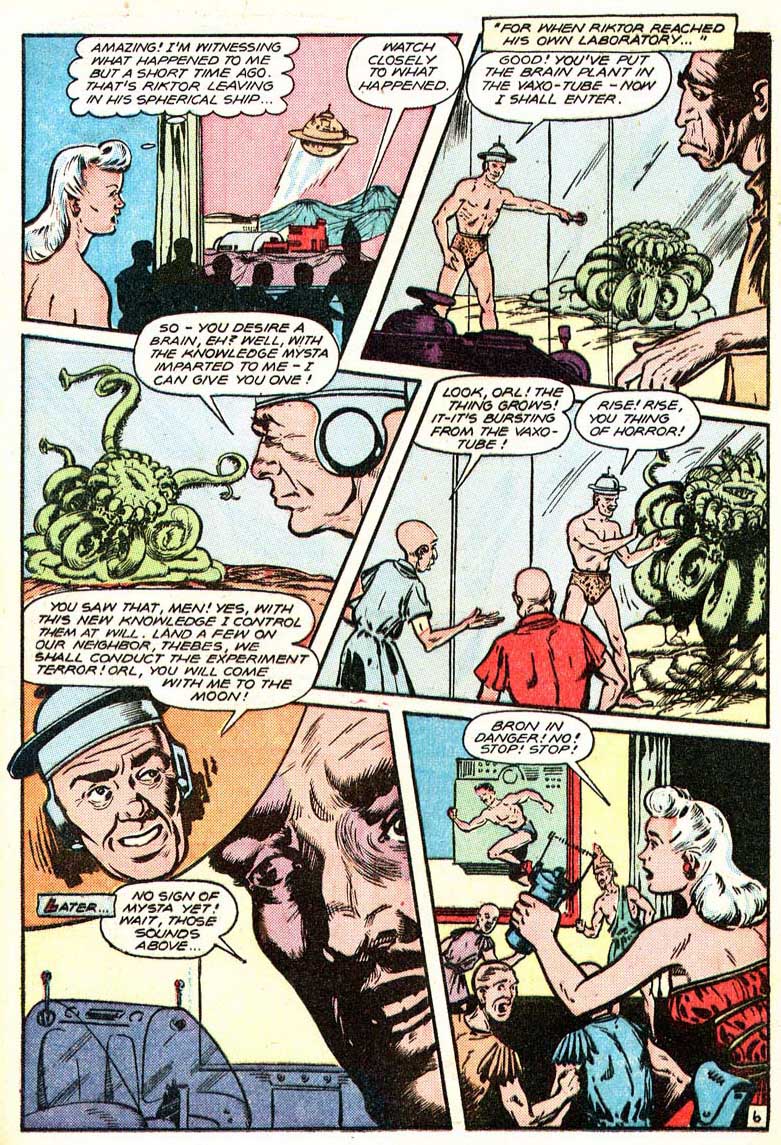
Planet Comics #52 (January 1948) features Mysta using time travel to defeat the menace of brain-sucking plants. The story also gives a nice recap of her origin with only an oblique reference to the original Mars story.
Enjoy!