In what became known as the self-proclaimed Marvel Age of Comics, new heights of quality story-telling in comic book art was achieved by ground-breaking artists like Ditko, Steranko and of course Jack Kirby. Steve Ditko in particular stunned readers with his wonderfully bizarre landscapes of surreal dimensional space while drawing Dr. Strange in the Strange Tales anthology series of the 1960's.
In my opinion some of Steve Ditko's best 1960's work was during his tenure on Strange Tales. Art that was at first average swiftly improved in creativity. It appeared as if Ditko wasn't all that interested in Dr. Strange at first or was not sure what direction to take it creatively. It was somewhere in the story arc with Strange fighting to survive against Super-Villain Team-Up of Dormmamu and Mordo and while seeking the cosmic entity Eternity that Ditko really seemed to start to care about the character and the work that he put into the book. It was this period I have come to think of as Ditko Unleashed.
After Ditko ended his tenure other illustrators stepped in to perform the art duties, most notably, Marie Severin. Other artists, while competent enough, were not in Ditko's or Severin's class and had to refer to outside sources for their inspiration. One of these artists was science fiction aficionado and fanzine editor Dan Adkins.
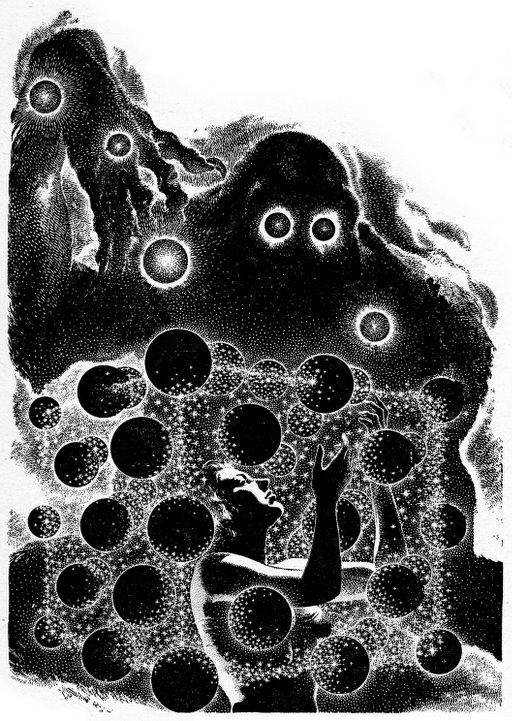
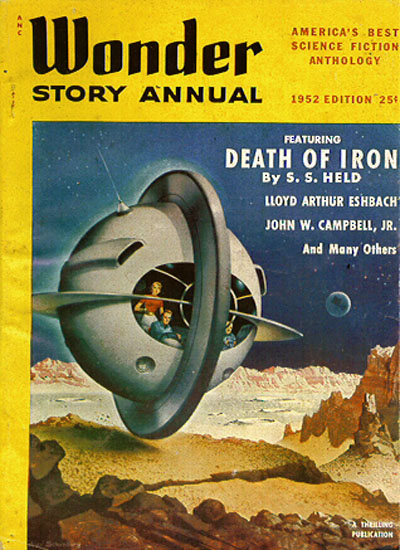
While browsing Datajunkie's site I rediscovered this classic science fiction image, drawn by the great pulp and SF artist Virgil Finlay for the for the reprinted S.S. Held story, The Death of Iron in the 1952 Wonder Stories Annual.

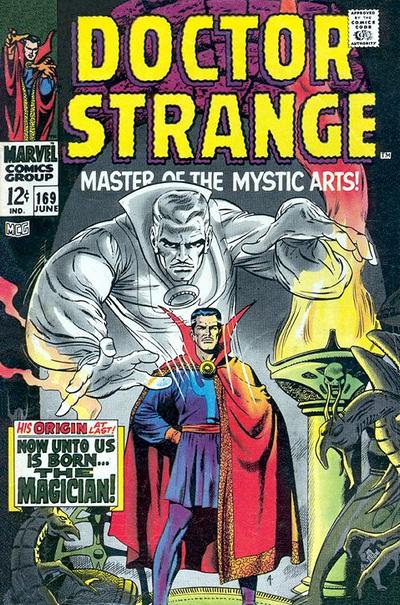
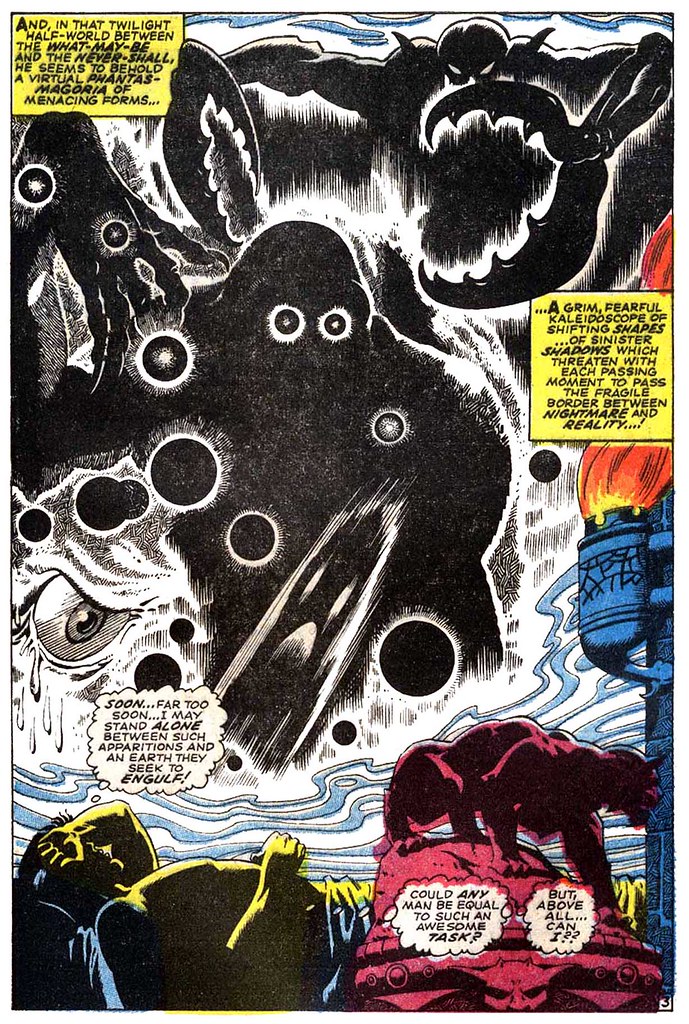
The picture rang some bells so I looked through my Dr. Strange collection and found this page depicting a worried Stephen Strange contemplating threats from other worlds in Dr. Strange, Master of the Mystic Arts #169 (June 1968, v1).

It is a safe bet that before the internet and greater interest in pulp magazines it was easier to use another artists' work as a muse and have the swipe pass unnoticed by fans. It's unlikely that other professionals did not recognize the origin of the image but I bet this page made the kids' eyes bug out when they saw it (Scenes like this are also part of the reason why Dr. Strange was a must-read title among college students back in the late 1960's).
This swipe is as obvious, though ultimately a bit more harmless in its deception, as the one spotlighting Bob Kane's artistic integrity and creativity vis a vis Batman, as related at the Vallely Archives.