Showing posts with label Live Without Shame. Show all posts

Saturday, June 02, 2012

Great Scott

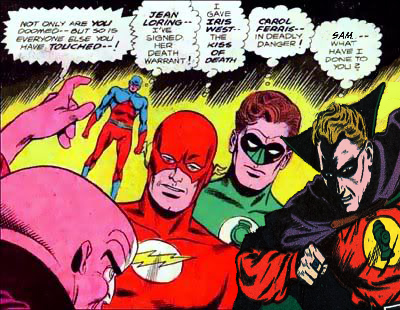
The big news in comic books this week is that a character based on the Golden Age Green Lantern,  created by Bill Finger and Martin Nodell in the 1940s, is gay. Pundits and groups have decried the decision to reboot Alan Scott, the old man and spiritual father of the Justice Society as a young gay man as nothing more than a publicity stunt. Maybe it is.

But that's okay, really. As long as a positive message of diversity, no matter the intent, is disseminated and represented as much as possible then that ultimately helps people and lets them know they are allowed to thrive.

Few comic book companies have avoided presenting gay characters in their books though often they were hesitant or clumsy in their presentation (though not so misguided as much as it was well-meaning as most of the depictions of African-Americans in the comics of the 60s and 70s). Among the current higher profile gay characters are of course Archie's Kevin, Marvel's Northstar, who has been out for years and DC's Batwoman. The latter two being good examples of characters the respective companies have been mostly at a loss since their creation as to how to portray them.

A few groups had issue with the news of Northstar getting married to his long-suffering boyfriend and the re-introduction of Alan Scott as gay. They claimed an agenda on the part of the comic companies and the usual tired old argle-bargle of the negative influence of comics. They have been mostly dismissed and marginalized by those motivated to be vocal about the issue. I'm cynical enough to believe that the only agenda Archie, Marvel and DC have is to make money. It is from the increased national discourse on homosexuality and the demands for equal human rights that companies like DC can comfortably exploit (and I mean that in the best way) sensitive political and cultural issues. That their savvy marketing direction can also positively add to the discourse in however a small way is a benefit.

In the 1970s Marvel  successfully tapped into the sentiment of the young on many hot-button issues, a trend that benefited the bottom line well into the 1980s. From the 1960s through the 1970s DC was the company that had the most precedent, albeit steeped in subtext, in exploring gay issues though this was found mainly in the pages of the various romance titles amd one had to read between the lines and ignore the conclusions to most of the tales to see it. Marvel, however, reveled in being relevant and routinely tackled social issues such as class and race. This was all about what the audience would accept and want. The same company that railed against "The Man" in the 70s was fully behind the institution of authority a decade or so earlier even in the progressive and socially conscious 1960s, when mainstream comic companies adhered to the idea of Camelot and the Cold War.

Both Marvel and DC had comical, if not insulting, missteps along the way concerning homosexuality. Marvel infamously managed to draw a lot of criticism over the stereotypical depiction of sexual predators as being gay in an issue of The Rampaging Hulk magazine. DC most recently appeared to be at loss of what to do with Batwoman after the initial PR interest in her being a lesbian faded. The Golden Age Alan Scott had a son who was a gay superhero/villain but he was rarely utilized and often was often depicted as nothing more than a menacing shadow haunting the headquarters of the JSA. Take that how you will.

DC also missed an opportunity to introduce the first openly gay Green Lantern back in the 1990s. When Kyle Rayner (whom I always thought of as bi-sexual) was injured he sent his ring for safe-keeping back to Earth to his intern Terry, a gay man. My expectation was that Terry would spend the next several issues using the ring, going through a steep learning curve and maybe experiencing some interesting character growth. That didn't happen. The next issue Kyle reclaimed his ring and continued his adventures as if nothing had happened and it seems DC either dropped the ball or felt they dodged a bullet.               

However progressive a comic book might be it isn't going to change the world in and of itself. Alan Scott being gay and Northstar getting married won't change anyone into a homosexual anymore than the Teen Titan Spotlight book featuring Starfire ended Apartheid. What it might do, hopefully will result in, someone feeling better about themselves in spite of what the cranks, superstitious, evil and simply backwards have to say to the contrary. Being gay is not different. Being gay is not evil. Being gay is not wrong. It just is.

Sunday, July 19, 2009

Look to the past for the solution to DADT

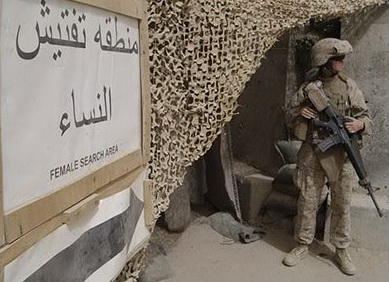
While it is true that women have always performed admirably in the United States Military it was also true that many job fields were restricted to men. The reasons for excluding women from some duties are numerous but primarily it was due to the mostly male opinion that some jobs are too hazardous or physical for women and are better left to their male counterparts to perform.

In the 1980s the decision was made to open many fields to women that previously excluded them. Some of these fields were at the time "proof-of-concept" exercises. Many positions were strictly for training and personnel placement purposes as females were as yet not allowed into actual combat. While this decision to include women in certain squad duties was a positive step forwards in equal treatment, at the time the integration of females into some fields was an unpopular move with many in the service.

This was particularly evident in parts of the military where the majority of the job tasks did not take place in a traditional office and required greater physical labor and longer hours at work. It was directed that of every unit a certain percentage of women be trained for combat positions. While this was not as great an upset in some branches of the military in the Air Force it was particularly problematic for some. Those who had no predilection for certain tasks were suddenly given a new duty simply because of their gender. In usual circumstances an individual is tested early in their career as to what job they are best suited for. Typically the ability of the soldier is matched with the requirements of the service and hopefully everything works out to everyone's benefit. Since the program was in an the early stages many people had no chance to be screened to see if they could be of benefit to the service in that particular position. There were great successes and spectacular failures but today very few people doubt that a woman could function in a combat position.

But in the beginnings of the program, certain peacetime combat positions, which for the Military Police meant training and certification on certain heavy weapons and other systems, were more desirable than others. Often a certification with some systems and weapons meant that during training exercises and deployments instead of being marooned (often for days) in inclement weather on a concrete pad in the middle of nowhere the lucky soldier was able to ride in climate controlled vehicles, go home at night, eat hot meals and just have a better over-all experience than the other grunts who were out busting their humps with boring, though necessary, physical labor and training.

The aspect that many in the field resented was that women were becoming certified in systems and with weapons that traditionally went to male members of the service. What this meant for the average grunt was that during exercises and training the women of the squadron were suddenly taken from their usual duties and temporarily placed into the more desirable posts. The men felt ripped-off and rightly so. They were the ones who, after all, put in all the extra work required servicing heavy weapons on a daily basis and they were abruptly exiled to the less-desirable duties while the female newbies got to relax a bit during exercises and deployments. Training deployments that included women in combat positions they would not at that time work in during an actual conflict caused a lot of resentment among the troops. The sentiment among many was that they got tossed aside for what amounted to a series of photo-ops at the expense of those who had already paid their dues.

The military recognized what was happening among the ranks and quickly took steps to rectify the hostility and reduced morale. That women would eventually serve as equals in combat is inevitable. It has worked with great success in many armed forces around the world. That women being assigned to combat roles has been slow to happen in the United States Military is not the fault of the ability of the individual soldier, but that of leadership.

When grumbling was heard about women being assigned to duties they would not actually perform in a conflict it was initially resolved by someone high up the chain of command dropping the hammer on all of those those below them. From the top down it was made abundantly clear that women would be training for combat positions. Women will be treated with the same respect due any other member of the military. The same standards will apply to everyone. If they can't hack it then that is what retraining and perhaps administrative discharges are for. Basically, any unhappy GI was told to shut up and deal with it. It was a new military and new challenges were on the horizon.

Which brings us to the current "Don't Ask, Don't Tell" policy. Long ago the military recognized a fact that they were very uncomfortable with: Many soldiers were homosexual. Equally troubling to the leadership was the reality that the majority of these soldiers served with distinction and were far from a liability to a unit. Ask any VA nurse off the record how many of their patients are gay and the answer will invariably be "Lots of them."

Loathe to lose valuable and experienced resources the regulations about homosexual service members were changed. A member of the armed forces could serve as long as they kept their preferences a secret. It was a controversial decision and the debate continues to this very day and usually to the detriment of the military. The current President pledged to overturn DADT early in his administration but due to political pressure or inertia among the branches of the service has either delayed doing so for the foreseeable future or is taking it far slower than some people would like. None of this is a matter of anyone's idea of right or wrong or if they are pro, con or indifferent. This trancends all of that. It is a matter of human rights and human dignity.

As history has proven time and again outmoded, bigoted rules have hurt the ability of the American military to defend the country. Pilots that were desperately needed in combat by the Allied war effort in the 1940s were delegated to minor duties because they were African-American. During and after WW2 the people of Japanese and Philippine decent were considered untrustworthy to serve. A translator specializing in middle-eastern languages and whose work is of vital importance to intelligence gathering, is discharged because he is gay. What is overlooked is that none of this is rin reality a matter of anyone's idea of right or wrong or if they are pro, con or indifferent. This trancends all of that. It is a matter of human rights and human dignity.

It is long past time that DADT was rescinded. The arguments against this being done are many and they are the same old tired tropes with only the name changed. There are claims that openly gay soldiers are bad for morale and will harm the effectiveness of a unit and the ability to succeed in a mission. The same claims were once made of African-Americans, the Japanese and women. These claims are true after a fashion not because of the soldier's preferences, skin color or gender but rather the cultural environment they exist in, and then only if it is tolerated by leadership. Overcoming the ignorance and entrenched ideas of such a large collective as the US Military takes decades, if ever. Soldiers take to regulations quickly but change their minds slowly.

What is required to enact change is for decisive action to be taken once and for all by those in charge. In the 1980s soldiers that had a continuing problem working with women in combat roles found themselves facing administrative charges or getting shown the door. Attitudes changed after a while and male soldiers began asking why they were the only ones getting shot at and opined that women should serve in combat along side them taking the same risks and garnering the same rewards. Gradually convincing each and every service member that gay soldiers can serve openly without destroying America isn't going to work. We need every able-bodied person we can get and we need to keep them. As with the manner in which women were successfully integrated into a greater role in the services this is also how homosexuality will finally be decriminalized in the United States Military.

What is required for DADT to be eradicated is a leader to cut an order that each and every person in our military from the top down must obey, and it boils down to this: Treat everyone the same, or face the consequences.