

The False Negative is becoming more pervasive over the last several years and violates one of my rules when it comes to purchasing: If a lie is needed to get me to purchase a product then I will never, ever buy it. This is just one of my rules that makes me a smart shopper but in the eyes of the Gods of Retail a poor consumer.
The False Negative manifests in any number of ways with one of the most common being the the false error tone. At various places such as the gas pump and at the check stand in supermarkets (as noted in the previous post Waste Lots, Want Not) the False Negative comes as an alert from the equipment that a person would normally associate with an error. I initially noticed it a few years ago while gassing up my car. The pump beeps with a descending tone, the opposite of the usual higher-pitching rising and happier sound of a successful transaction, prompting me to investigate by looking at the pump display screen. Where one would expect a message reminding me to choose a grade of gas instead would be an advertisement for refreshments or a car wash. This is a tactic in up-selling I expect that will decrease in effectiveness over time. Annoying consumers in this manner is a poor strategy that should only result in short-term gains, if any at all. One could only cry wolf only so many times before it is ignored.
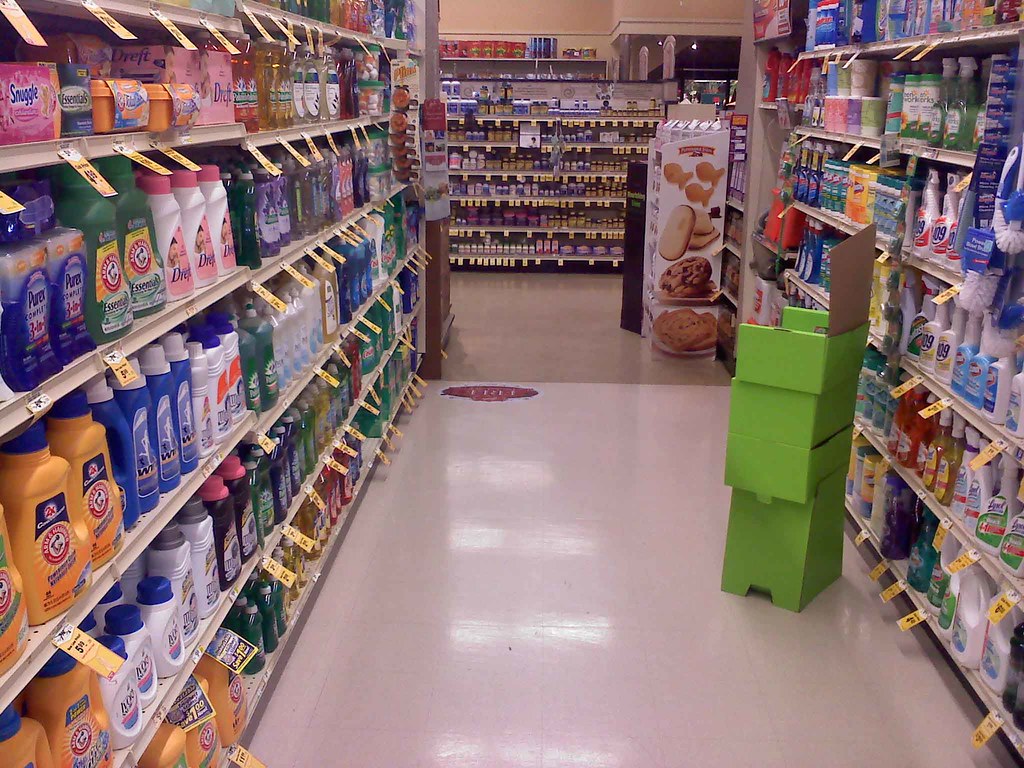
A False Negative that has been in retail stores for a while is the floor display advertisement in supermarkets. These ads occur as large adhesive signs applied to the floor of various aisles. One of the common themes of the floor display ad is that it resembles in layout an accidental spill or scattering of a product. In the snack foods aisle the floor ad would feature a bunch of cookies laid out on a plate. In the cleaning aisle a large ad for detergent could resemble a puddle of liquid soap on the floor. Typically the ads depict a box with the product bursting from it in some sort of flavor explosion.
 What the..? Now I can pay for the puppy's surgery! Aw, dang.
By making the floor display ad irregular in shape and form the eye is drawn to it. But not because the product is interesting or worth purchasing. Rather, the ad momentarily tricks the customer into paying attention to the product through a perception of something wrong (a failure of cleanliness) or even the hazard of personal danger through an unsafe area.
The shape and location of the floor advertisement causes the patron to notice it when entering the aisle and presumably keep aware of it on some level while shopping. From a distance of a few feet most of the ads appear as spills or messes and only when the patron approaches it closely does it resolve in the mind from possible slip and fall hazard to advertisement. Where I work I have observed an increase in calls for clean-ups in some aisles following the placement of certain ads which are moved and replaced on a regular schedule. Often customers walking by an aisle alert the employees of the store to a spill and when investigated, none is found.
I have personally observed that both the customers and employees are predictably desensitized to the False Negative of the faux spill and safety hazard. After a day or two calls for clean up to the area with the floor ad begin to wane as patrons and the employees become adjusted to the ad and awareness of it fades into the visual and mental background. I have found that it is incumbent upon the managers to ensure that each call for a clean up is thoroughly investigated as due to human nature bored, careless or over-worked staff will assume yet another notification of a spill is going to prove to be without real cause.
It would be interesting and not totally without merit to track slip and fall cases in retail establishments to when and where floor display advertisements were placed. An insurance company could possibly find a correlation from the possible result of an injury claim due to messes where not rapidly attended from the assumption there was no spill and the call for a clean up of an aisle was merely another False Negative ad on the floor.