Showing posts with label lesbian. Show all posts
Showing posts with label lesbian. Show all posts
Tuesday, May 18, 2010
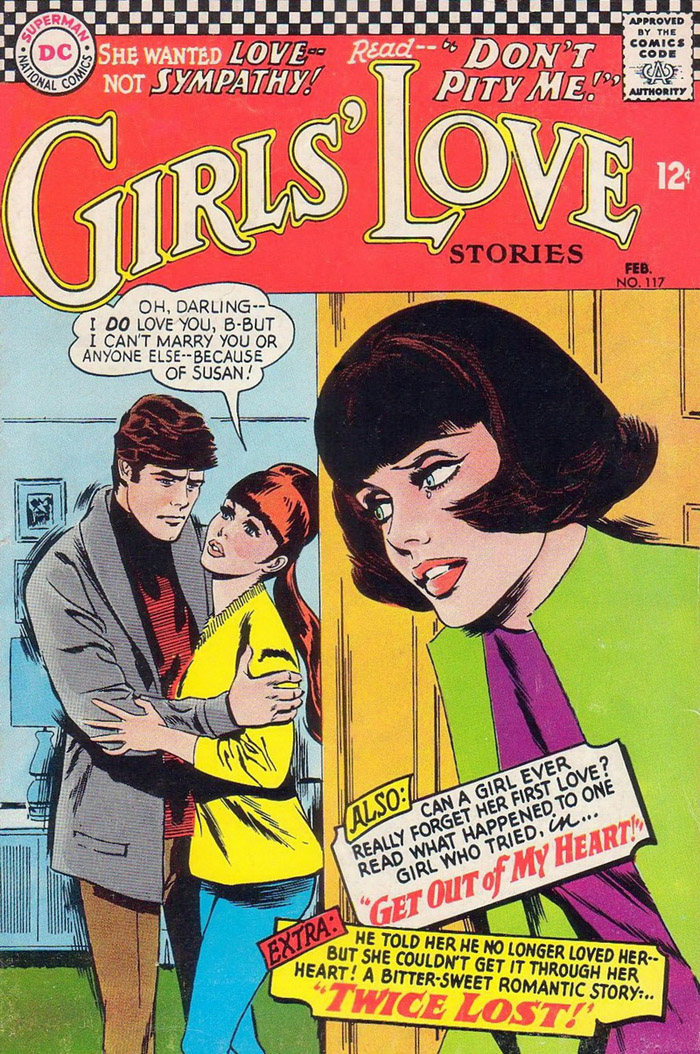
Because of Susan


Monday, February 18, 2008
That Strange Girl
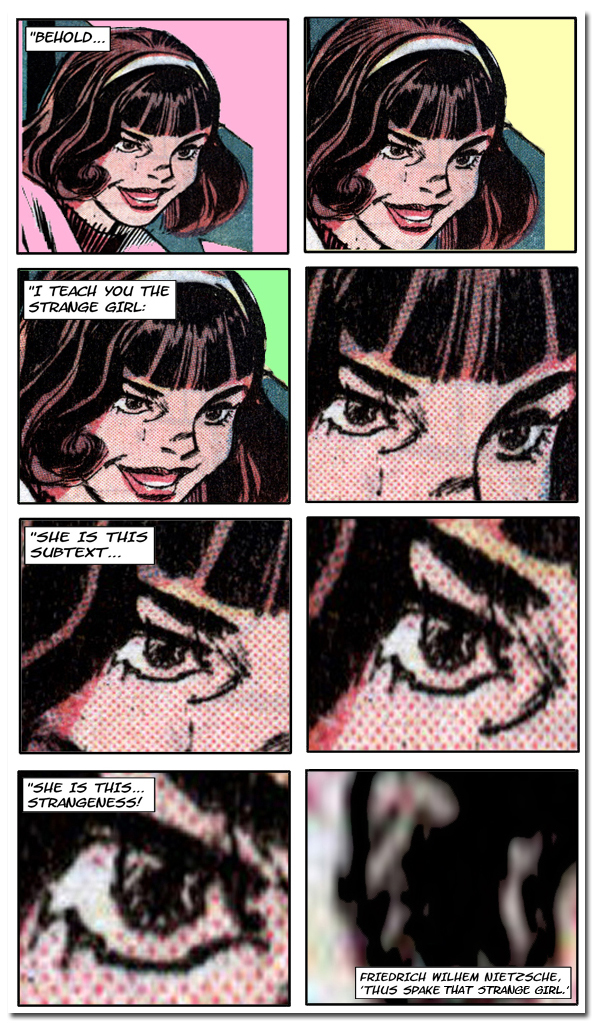
Currently, comic books and other media rely upon more than just the typical shallow male and female demographics and try to appeal to other niches of the consumer market by specifically courting all of them and their disposable income through various plots, characters and gimmicks. But in 1974 the Comics Code Authority could not allow an openly gay character to appear in a comic book and creators wanting to tell a certain type of tale or use a ready-made semi-controversial plot device had to find a way to tell the story in a manner that would both allow readers to get the gist of it and still be published. No one other than the author could say if most of these stories were intentionally written to have a hidden meaning and they may be what they are on the surface...cautionary morality tales and lessons on acceptable behavior from the status quo. What That Strange Girl and many of these stories have in common is the final panel or panels that use an awkward inclusion of exposition to abruptly and against all plot direction reinforce the traditional male and female gender roles. This device of exposition at the finale of the story was also common in the crime and horror comics, where the final panel would reveal the criminals paid for their crimes and that a character wasn't really Satan but was a man in a mask teaching someone a lesson. In the romance comic books the final panel of exposition usually depicts some woman declaring her eternal love and devotion to a man in spite of everything else the story may have been hinting at .
Depictions of sexuality in comic books that did not meet the criteria of the CCA (whether intended or not, there are thousands of questionable examples in comics) meant the creators had to be for the most part very subtle in their presentations. As any reader of the Golden, Silver and Bronze Age of Comics knows this was accomplished with varying degrees of success and subtlety. If there existed any hints or behavior associated with a character that violated the CCA standards then that usually meant the character had to be a villain or depicted as mentally disturbed and their sexuality was portrayed as deviant and extreme, i.e. the "Terrible Trio" hippies featured in Wonder Woman #185.
The subtext in That Strange Girl is not at all subtle ("Agnes isn't shy once you get to know her") and is only one of several stories of the type that appeared in romance titles of DC, Marvel and other companies of the era that dealt with similar issues. Most of the entries however did not present so ridiculous or heartbreaking of a climax to the story.
You can read That Strange Girl by clicking the cover to Young Romance #197 (Jan-Feb 1974) below.

Friday, June 08, 2007
Girl's Love Stories #152: Flying under the gaydar
These final panels from the six-part comic book soap opera "Confessions" are supposed to convey the reconciliation between two sisters who were feuding over men. But due to the text and the poses of the characters what is supposed to be a hug with a sibling really comes off as something pretty different altogether.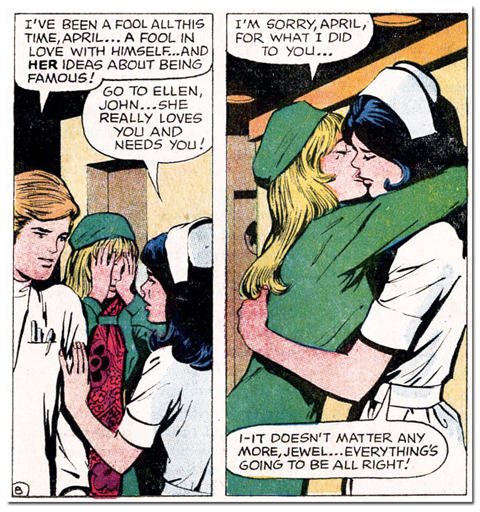
At every turn Jewel sabotaged any budding romance between April and any possible suitor. Jewel later confessed that she interfered in her sister's relationships out of jealousy of April's potential happiness. In my mind that really signified that Jewel was worried that she would lose her chance forever to be with April if her "sister" went ahead and conformed to traditional standards of gender identity and sexuality. The final unnecessary and gratuitous expository panel immediately after the kissing scene only reinforces my impression that this story was ultimately about two women finding each other back before it was acceptable to have openly gay characters in pop-media.
Subscribe to:
Posts (Atom)